with the caveat that I am not updating as regularly as I once did. But I'm still around.
Thanks! And happy reading.
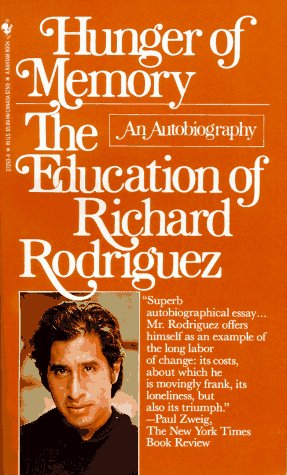 I first saw this book on a high school summer reading list at the bookstore in Colorado. Asking about it on the East Coast very few people had heard of it. That different alone peaked my interest. Is the academic interest in Hispanic culture that much larger west of the Mississippi? (Yes, there is a demographic reality that answers my question. But as an "American" isn't the melting pot relevant everywhere?) Lo and behold, my dad, a high school English teacher - who lives in Colorado - had the book on his shelf. So I stole his copy.
 My mom picked this book out for me based on its title and its cover art; she figured as a girl who has way too many Barbie dolls and two boys I could appreciate what O'Donnell had to say. Whenever my sons saw this book on my nightstand they would laugh and tell me all about the boy who was dressed like Captain Underpants. The cover sold exactly what the book is: a light comedic memoir of one woman's attempt to live in a house of males; it seems like the perfect book for a mom of two boys. Having read it, I immediately passed it on to a friend who is the mom of three boys. There is enough truth and humor it what O'Donnell says that I can it will make the rounds amongst my mom friends.
 Every semester I teach Introduction to the Study of History. The course covers the twentieth century and every student is expected to write a research paper. I have a distinct number of students fascinated with the history of technology - current computer/cell phone/internet technology in particular. But in general the papers are pretty bad (to put it mildly). The students tend to wax poetic about how "shiny" technology is and spend much less time actually writing about how the technology emerged. Not a student of the History of Technology myself, I decided to beef up my own knowledge in order to give my students a better foundation.
 I would love to teach an Environmental History class - personal interest and student intrigue. However, I do not have an academic background in the field. Starting from scratch is a daunting task but I am curious enough about current environmental issues to dive into the field on my own. Last year I read The Gentle Subversive, a biography of Rachel Carson which I found enlightening - she is not an individual I ever heard about growing up (and I grew up in an environmentally conscious area). But living down the road from the Rachel Carson Homestead her name has come up more often recently.
 (One of my goals this summer is to pick up new scholarly books in my field - something I have not done since graduating and enjoying a respite from academia. I can't promise they'll be as exciting as my usual fiction entries but I am enjoying the foray back into history.)
[The last "true" GDR kids] trends amounted to nothing more than a staged performance of individual withdrawal from public life, a refusal to participate, and, to a certain extent, collective boredom. In cliques, everyone looks and feels the same. Internal unity was more important than external individualism. Such was the schizophrenia of everyday life in the GDR. You had to participate without attracting attention, to function within the system without actively collaborating or supporting it. All representatives of the state and other public functionaries were viewed with distrust and distaste. So people tended to keep the private sphere - where they could truly say what they thought - strictly separate from the public one. (160-61)
 Although I am an academic by training, I don't often pick up a non-fiction book just for fun. I prefer to keep my reading light and unencumbered. When I do read non-fiction I find myself straying and often skimming. Not so with Carles' book. I really enjoyed reading it and found myself reading much more carefully than I sometimes do.
 For the first time in a number of years I feel like I have the energy, the time, and the interest to read something vaguely academic. In the search for an academic topic, I realized that my growing interest in environmental history did not yet have an academic basis. Limited to the local public library and without a syllabus in hand to guide me, I went for a familiar name to direct my research. Living where I do, the name Rachel Carson has come up more than once, so that's where I started.

 I had seen the book Super Cleanse at Target which got me thinking. I wasn't invested enough to buy it so instead I requested The Detox Diet: The How-To & When-To Guide for Cleansing the Body of:... from the public library. I was looking for a way to jump start eating healthier this summer and I had heard of detoxification diets. Long story short: I don't think this is the plan for me. I respect people who had the dedication and the tenacity to stick with a liquid or completely fruit and vegetable-based diet. But I like my food too much. I think it is possible to eat healthier without going to such an extreme - even if it is for a limited amount of time.


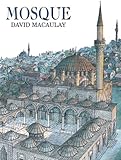 s 2003 work describes the creation of a fictitious mosque in the 16th century Ottoman Empire. He follows the architect and the financial donor as they decide how to construct the building. Macaulay is sensitive to the historical period and carefully explains the role of zakat, legal almsgiving, to justify the cost in constructing a mosque. His pictures and his explanations clearly show the role of a mosque in society; the important features of a mosque, specific to the Ottoman Empire in this era, but in many ways similar to mosques across historical and regional boundaries; and the surrounding buildings that would have likely been constructed alongside a mosque. With a long history of other architectural books for young adults, Macauley has a strong history in his field. I was pleased at his interpretation and sensitivity to a field that can often be contentious today.
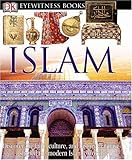 yed Macauley, I have to say, I liked Islam even better. Like the rest of the DK Eyewitness book series, this book is set up like a young adult's encyclopedia. Each page incorporates pictures and short explanations to further explain the religion and the society of Islam. What impressed me the most with this book was its ability to remain unbiased and historical. It would have been easy to oversimplify the history of Islam and try to describe one Islam that was relevant at all times. The authors of this work have not done so. There are pages that cover important historical era - Muhammad's life, the Crusades, the creation of the Ottoman Empire - and sections that cover diverse geographical areas - Mali, India, China as well as the more familiar (to Western readers) Arabian peninsula.

 My first exposure to Anna Quindlen was the year that I lived in Paris. My parents had sent me a care package that included Jane Eyre from my mom and Object Lessons from my dad. Object Lessons was Quindlen's first novel. Dad picked it out because he believes she is one of the best writers (and in my dad's eyes that means technical composition skill - putting together a noun and a verb) today. He has always enjoyed her columns.


