Tuesday, September 28, 2010
State of the Onion by Julie Hyzy
Tuesday, September 7, 2010
The Girl with the Dragon Tattoo by Stieg Larsson
The Girl With a Dragon Tattoo is an international phenomenon. I have to believe everyone in the literate world has heard about this book in the past six months. My mom has read the series, my husband has read the series, friends have read the series. I finally decided I would bite the bullet and read The Girl with the Dragon Tattoo. Too many recommendations tend to leave me cold; I find overwhelming praise often means I am disappointed in a book so I started reading with considerable trepidation.
Happily I can report I liked The Girl with the Dragon Tattoo as much as alluded to by other readers. Larsson writes a compelling book. His characters are not archetypes and yet he describes them well enough to make them believable. All things considered, Larsson does not lack for descriptive detail. Reading the second book in the series I find that he overwhelms with detail, but more on that later.
For anyone left who has neither heard of the book nor seen the movie, the plot revolves around a 30-year old mystery surrounding a teenage girl who disappeared from an island without a trace. Mikael Blomkvist, a veteran journalist suffering from professional problems, is brought in to reanalyze the facts and try one last time to discover what happened. Eventually he needs a researcher to help with his search and brings in Lisbeth Salander, the infamous girl with the tattoo. Lisbeth’s back story ultimately becomes the plot of the Larsson trilogy. In this book Blomkvit and Salander solve the immediate mystery. But Larsson sets up the conundrum for the next two books.
So many people have commented on this story that I don’t feel it necessary to once again rehash the merits of Larsson’s story or writing ability. Let me just reiterate a thought I had when I read Camera: the Swedes are a DARK people. The literature that I have read involves sex and brutality in concrete, detailed terms. I have no idea if this is a fair assessment of the population or merely the books which have been translated to English as having a cross-cultural interest. But either way, it is not a book to be read by the faint of heart. Sexual deviance is an assumed narrative in Larsson’s storylines.
As I write, I am halfway through The Girl who Played with Fire. So far, I like the first book better. But I’ve been told I have to finish all three before I can make any conclusive statements.
Tuesday, July 13, 2010
Murder in Miniature by Margaret Grace
Wednesday, January 13, 2010
The Sultan's Seal by Jenny White
- The Janissary Tree by Jason Goodwin
- The Aimee Leduc mysteries by Cara Black
- The Far Pavilions by M. M. Kaye (not a mystery but a classic British imperial novel)
Thursday, December 17, 2009
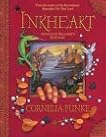
Inkheart by Cornelia Funke
- Maybe overly obvious, but I can't not include Harry Potter
- Because Funke references it in Inkheart The Princess Bride
- Anything by Garth Nix (he can be dark but Inkheart has dark tones too)
Sunday, November 22, 2009
The Lightning Thief (Percy Jackson and the Olympians #1) by Rick Riordan
Saturday, November 7, 2009
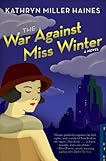
The War Against Miss Winter by Kathryn Miller Haines
Thursday, October 29, 2009
Dead Until Dark by Charlaine Harris
- Vampires "glow" but more so to the main character
- Vampires can do "glamors" to calm people down and make them less tense
- Vampires overall are scary and kinda evil, except our vampire. He's strong and sexy, and REMARKABLY protective
- One of the main characters can read minds - of everyone except the other main character
- The main character has a friend who shockingly is a shapeshifter and must turn into a dog during the full moon
Friday, September 11, 2009
Eggs in Purgatory by Laura Childs
Wednesday, July 8, 2009
The Mournful Teddy (A Bear Collector's Mystery) by John J. Lamb
Tuesday, May 19, 2009
The Rowan by Anne McCaffrey
Thursday, April 16, 2009
Murder on the Eiffel Tower by Claude Izner
Books in translation. These books are a quandary for me because I am never sure what to say about the writing. Do I review the book as though it is in its original form? Or does the translator play a role in the description of the book? Americans praise Victor Hugo for his writing style, but is it really Hugo they are praising or random translator #32 whose version of Les Miserables everyone is reading this year?Thursday, March 5, 2009
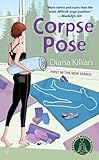
Corpse Pose by Diana Killian
I will read almost anything. I like a good light mystery to read when sitting at gymnastics with the boys. It's a great way to pass the time and be entertained. I generally am not that conscious of writing style. But occasionally I pick up a book for which the writing style is so incongruent and bad that it is hard not to notice. Corpse Pose falls into that category. The writing is SO bad I am amazed that anyone actually published the book. The best way to describe this book is to let it speak for itself. The following quote is a description of the small town that the main character A.J. is entering after she discovers that her beloved aunt has been murdered:...On the outskirts of the town was a small cemetery known as the Hessian Graveyard, although it wasn't old enough to inter any fallen Hessians. It was one of those fascinating places with ornate headstones and morbid statuary of weeping cherubs and little children petting small animals. Gus Eriksson, Aunt Di's naturalist photographer lover, was buried there somewhere beneath the blanket of red and yellow autumn leaves. And now perhaps Aunt Di herself would rest there. Had Aunt Di left any final instructions about her funeral arrangements? A. J. had no idea.
Really? All in one paragraph? And what's with the Hessians? That has less than nothing to do with the plot. This is the only mention of the graveyard so why the inclusion of the statuary - descriptive though it may be?
Any my favorite description in a cozy mystery/chick lit/bad romance kind of way:
"Ma'am." His breath smoked in the chill air. He touched the brim of his hat. "You've had some trouble?"
His eyes were green - startlingly green - in his tanned face. He was handsome in a rugged Marlboro Man kind of way. Handsome in a way A. J. didn't like. She didn't like big, buff, overpoweringly masculine men. She liked clever, sophistocated, sensitive men. Or course, she preferred clever, sophisticated, sensitive heterosexual men, but apparently one couldn't have everything.
Your brain spinning in circles yet? Don't get me wrong, I would love to have someone publish my bad cozy mystery. And I guarantee the writing is not significantly better; Hemmingway I'm not. But I am starting to feel like if you include "tips" and "recipes" at the end of your book it is an automatic entre to publishing. Yes, that's right, the last few pages include information about how to perform the Corpse Pose in yoga and a recipe for basic stir fry.
Oh, the plot of the book? Not horrible really. Not any worse than most light cozy mysteries written these days. But someone needed to edit more carefully and not just assume the book would sell because it is about yoga - oh wait, technically it is "A Mantra for Murder Mystery" - a popular topic currently.
Don't waste your time. Maybe Diana Killian's future books will be stunning award winners. But before that can happen someone needs to enroll her in a writing class with a very strict professor who doesn't allow cheesy overdone descriptions.
Monday, December 29, 2008
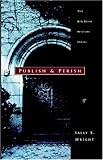
Publish and Perish by Sally S. Wright
I am always on the lookout for a good mystery. And there is nothing better than a good academic mystery to whet my whistle. So, I was thrilled to find Sally Wright's new academic mystery series. I picked up the first book in the series Publish and Perish and just finished it.Friday, October 31, 2008
O'Artful Death by Sarah Stewart Taylor

Wednesday, August 6, 2008
The Salaryman's Wife by Sujata Massey
The story revolves around Rei Shimura a half-Japanese, half-American 20-something who lives in a small apartment in Tokyo and teaches English to Japanese businessmen. During a New Year's Eve vacation she becomes involved in a murder scandal. She finds herself intertwined with Hugh Glendinning, a Scotsman who is accused of the murder.
I read another of Massey's books - much later in the series - and liked it well enough to have gone back and gotten more in the series. But, at this point, the character is not overly likable. She is quick to be offended. She tends to be prickly to the point of offensive. And Massey creates a weird friendship triangle between three of the characters that seems awkward.
When I finished the long, vaguely convoluted plot my immediate response was, (in high academic terminology) No duh! Massey threw out innumerable red herrings but, to me, they were all quite obviously not part of the overriding plot.
Massey did win an Agatha Award for Best First Novel. She has continued to expand the series having written at least nine further books. And, despite everything negative I've said in this review, I'm currently reading the second book in the series. So, what is it that has kept me reading? I think it's Massey's incredible description of a people and a society. I might not want to visit it, but I am intrigued by it and I feel like Massey has described this world more honestly and aptly than some authors might. Plus, while I find Rei immature, I know that she matures as I read in the later book. I appreciate the fact that Massey has written a character that is not stagnant.
Convoluted review? Yeah, that's sort of how I felt about the book.
Sunday, July 27, 2008
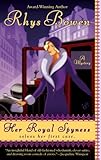
Her Royal Spyness by Rhys Bowen
I had a chance to meet Rhys Bowen at the same book signing even where I met Ellen Crosby. If you ever have a chance to go to this go - it's terribly fun. (Although make sure you have either given yourself a spending limit or you have lots of spare on your charge card. It's way too easy to spend too much money. I resisted the urge to go this year. Maybe next year...)Anywho, Rhys Bowen was another terribly nice lady. I had read some of her Molly Murphy books which I enjoyed. They follow the story of an Irish immigrant to the United States in the early twentieth century. I picked up a copy of Her Royal Spyness, the first book in a new series, and had a nice chat with Ms Bowen. I passed the book along to my mom and just got around to reading it.
This new series is great!! I noticed in the acknowledgements that Bowen had thanked Jacqueline Winspear. I'm a big fan of Winspear's books so that put me in the right mood. Like Winspear, Bowen decided to tackle the interwar era in London (a favorite era of mine for any number of reasons). However, unlike Winspear, Bowen took a completely light-hearted attitude and wrote a fluffy but fun story.
The main character, Georgie, is 34th in line for the British crown. As a result she was trained like royalty. But, like much royalty by the twentieth century, Georgie's family has no money. She can't just *get a job* like a normal person, but she tries. Her attempts at work, her ability to poke fun at herself as royalty, and Bowen's grasp of British society and the importance of class combine to make a really enjoyable book.
The book is not deep. It's not meant to be. It is a perfect light summer read. It's not smutty or too heavy on the romance. It's just fun. (And apparently other people agree. It has gotten a decent amount of attention.) Now I'll just have to wait for the second book to come out in paperback.
Wednesday, July 16, 2008
The Merlot Murders: a Wine Country Mystery by Ellen Crosby
Crosby has a light writing style that made her book a really quick read. That doesn't mean the plot was overly basic just that she was descriptive without being laborious, detailed without getting mired in text. I fell into the story and was able to read the entire book in less than forty-eight hours. It was shy of 300 pages so it wasn't a long book, but it also wasn't heavy.
I enjoyed Lucie Montgomery, Crosby's main character. She has a past that makes her an interesting character but she is not somehow disturbed and jaded by a haunting mystery. Crosby explains up front what makes her heroine unique - and she writes the difference well. It was not too heavy-handed nor was it suddenly forgotten about on page twenty.
In addition, I enjoyed Crosby's attention to detail with wine making. I always enjoy a book where I can learn a few tidbits of trivia. Having lived in Virginia I knew bits here and there about Virginia wine-making. And as a UVa alum it would be hard to not know about Thomas Jefferson's connection to the wine making industry. But, I did learn more about what makes Virginia wine unique and about the actual process of harvesting grapes and turning them into wine. I don't know that I could hold an educated conversation about the world of vintners, but I feel as thought I might know listen to such a conversation and know what was going on.
The only thing that I didn't like about The Merlot Murders was the ending. Not that I disagreed with how she solved the crime. Instead I just felt like the story ended too abruptly. She was obviously setting herself up for a sequel and the beginning of a series. Nevertheless, I still would have liked to see at least one more chapter to wrap up the story. As it stood the murder was solved, the book was over. There was absolutely no sense of closure. What about all the lingering problems that remained?
All in all, I would recommend this book to almost anyone. There was no overt sex or violence. The story was intriguing without being too edge of your seat gripping. I will definitely keep my eyes out for the two other Wine Country mysteries that Crosby has since written. And maybe I will get a chance to see her at another book signing and tell her how much I enjoyed her work.
Thursday, June 26, 2008
Pride and Prescience by Carrie Bebris
Bebris is a member of the Jane Austen Society of North America and has done her research. Her first novel, Pride and Prescience starts almost the moment that Pride and Prejudice ends. Jane and Eliza Bennet are marrying Mr. Bingley and Mr. Darcy as the book opens; Caroline Bingley is simultaneously announcing her own engagement to Frederick Parrish a wealthy American. Unlike many typical mysteries no one dies immediately. In fact, the death is only a very small moment in the overall storyline. Instead, the story is really a convincing sequel to Austen's book with the continuing adventures of Bennet and Darcy.
Bebris does a great job of keeping the characters true to the era. The costumes, the speech patterns, the social mores all blend in well with the early nineteenth century. The storyline does not delve into topics that would have been unfamiliar or uncomfortable at the time. The relationship between Lizzie, her sister, her husband, and her extended family continues logically from where Austen left off. In all, Bebris has proven her mettle as a true Austenian who knows the author, the era, and the norms.
As a diehard fan of all the Austen novels, I really enjoyed reading Bebris' first foray into the world of Jane Austen. It was like picking up a familiar book and rereading it but finding a twist in the end. However, the twist in the end might throw a few readers for a loop. This book definitely builds on the stereotypical gothic novels written in the 1800s. There is a hint of the spiritual. Not everything can be defined by science. Instead of solving the mystery using scientific method, Elizabeth Bennet solves it using her intitution and cunning. But, her intittion suggests something of the supernatural. If you don't like any hint of fantasy in your reading, this might annoy you (I know it did my mom who gave me this series). But if you're willing to spare a moment of suspension of disbelief (and really, should anyone be surprised by the foray into fantasy when discovering that the great Fantasy publishing company Tor released these books) this series is great.
I picked up Suspense and Sensibility as soon as I put down Pride and Prescience. One more quick warning. As familiar as I am with Pride and Prejudice, I have already found that I need to go back and read a synopsis of the original Jane Austen work in order to place the characters and better understand the interactions between everyone. Off to look up Sense and Sensibility.
Wednesday, May 7, 2008
On What Grounds by Cleo Coyle
But, as a lover of a good coffee shop, a good mocha, and a good book, I enjoyed Coyle's story. I read this differently than many mysteries because it is on the list for my next book group meeting. I recommended it to our group, none of whom are mystery readers. It made me more conscious of the style and type of writing that these books use because it is so distinct from the more recognized "literary" works.
There is something very appealing about the light tone, the silly quips, and the lack of need to think deep thoughts while reading. I had a good idea of who the criminal was, but I was pleasantly surprised to discover I hadn't uncovered the whole truth. I feel like I did learn something - about coffee making, coffee storing, and the Village in New York.
In some ways this book is a crossover between a cozy mystery and chic lit - although I don't know that you can clearly distinguish these two genres. Like many chic lit books, On What Grounds features a "normal" female crime solver, a possible romantic interest, and satire and cynicism about life in general.
I liked the book well enough that I am already 70 pages into the second book in the series. It's fun, it's relaxing, it's a good read.