Showing posts with label Children's. Show all posts

Thursday, May 26, 2011

The Graveyard Book by Neil Gaiman


I love Neil Gaiman's books. He can create the most fascinating, dynamic, unique worlds. I have read all of his adult books. But I am not as enamored of his children's literature. I feel it is a bit dark (who am I kidding, it's really dark). I liked Coraline as a story, but it is not something I have given either of my kids and probably won't for some time. So, it was with trepidation that I picked up The Graveyard Book. I was surprised when I found out it had won the Newberry Medal - the highest honor a children's book can receive in the United States.

I will admit to being pleasantly surprised. I really enjoyed Gaiman's story. While dark - the premise is that a young boy's family is killed and he is raised by ghosts in a graveyard to protect him from the murderer - the story is not graphic or scary or otherwise inappropriate for a children's story. Yes there is suspense and there is implicit violence, but there is nothing over the top (a phrase I could frequently use with Gaiman).

One of the reasons I liked this book was the way Gaiman put the chapters together. There is a clear overarching story that follows from the beginning to the end. But each chapter is episodic. You could read an individual chapter as a complete story - a point Gaiman makes about his own book. In fact, the chapter about the witch was originally published as an independent short story. When reading to kids, having a complete story is a nice touch.

Another feature is Gaiman's incredible creativity and novel way of seeing the world. His ghosts resemble characters in other literature, but they all have a Gaiman twist which keeps them original and engaging. His perceptions of death and the afterlife while familiar are not overly dark if a kid were reading the story.

Possibly an odd aside, but the copy I read included Gaiman's Newberry acceptance speech which was amazing. It had Gaiman's wry humor, a respectful amount of humility, but also a poignancy. Gaiman reminded his readers/listeners that great literature to a child is nothing more than a book that creates an escape. What we read as kids doesn't ever have to win awards or even be memorable five years down the road so long as it creates a world to explore.

Wednesday, May 25, 2011

(Not Beginner) Chapter Books

Now that my kids have jumped into reading I am beginning to realize how many levels of books it is necessary to have. I knew about the categories of pictures, beginning readers, and chapter books. But my kids are smack in-between beginning readers and longer chapter books. They can handle chapters, but don't want 150+ pages. They still like pictures on pages, but want themes that relate to them. Thank goodness for librarians and classroom teachers. I have been compiling a list to meet the needs of Eldest who loves to read, likes adventure/fantasy stories, prefers human protagonists to animals, wants to read Harry Potter, but is still only 7. It's harder than I would have thought. But, in case, you have an avid reader who is still developing his reading ability, here are some suggestions that we are working on:


The first category is the emerging bridge between graphic novel/chapter book which is really popular in my house:

  • The Diary of a Wimpy Kid (probably the first in this genre. Its popularity has helped create many others)
  • Big Nate (undoubtedly riding on the popularity of Wimpy Kid, but Eldest enjoyed it)
  • Magic Pickle (one book in the series is a pure graphic novel. Eldest was disappointed the others had actual chapters...)
  • Frankie Pickle (while being forced to clean his room, Frankie fights a monster with an old tuna and mayonnaise sandwich...)
  • Dragonbreath (while this seems to be popular for many kids, Eldest has turned his nose up at it. Too cute-looking maybe???)
  • and of course... Captain Underpants (just in case you don't have a young kid and haven't heard of this series)

As for actual chapter books, without the graphic novel concept, it has been tougher. Eldest has told me in the past that he can't see the pictures in his head, so he really prefers the visual. But I'm working on encouraging more chapter books as we seem to be running low on age-appropriate graphic novels. I'm liberal in what he can read, but hardcore manga is not okay. Yet.

Here are a few books that have caught on in our house or we are planning to try this summer:
  • Black Lagoon chapter books (Eldest picked up the picture books at school, so he knows the series. He can read these in one sitting, but he's reading!)
  • Naruto chapter books (based on the Japanese manga show, this series has been toned down for a younger audience. It appeals to Eldest but is *clean* enough for mom)
  • Dragon Slayers Academy series (these are popular with a lot of kids. I am trying to convince Eldest to read them, but haven't had any luck yet)
  • Secrets of Droon series (same as above. I think if I could get him started, he'd like the series, but so far Eldest has resisted)

I would love any other suggestions or ideas. Anything to encourage a love of reading...

Tuesday, January 11, 2011

Hiatus?

Sorry for being gone for most of the past three months. I have hit a wall with blogging about what I read. I finish a decent book and thing, how much can I say about this series that I haven't already said three times before? Or I read a book for leisure, finish and think: enjoyable. Enough said. So many people blog so much that I am feeling lost in the shuffle of excess.

There are two directions I can take the blog and I think I will work at both.

1. I am trying to get back into reading more academic work. There has been a lot published since I graduated and I would like to see how the literature has changed. I have three books sitting at home with bookmarks waiting to be finished. So that's where I will start.
  • Sixty Million Frenchmen Can't Be Wrong - I finished yesterday
  • Hunger of Memory: The Education of Richard Rodriguez an autobiography - I should finish today or tomorrow
  • Body by Weimar: Athletes, Gender, and German Modernity by Erik Jensen - I'm on page 52 and would like to finish before classes start next week
2. Kid's books. My boys are reading so differently right now. And finding age-appropriate and interest-appropriate books is a challenge - but a challenge I love. Maybe not every book, but when something jumps out, I will post about what catches their interest.

And I won't ignore my own books completely. If there's something particularly engaging or worth discussing, I will still post it.

Happy New Year!

Thursday, December 9, 2010

Wordless Picture books


During the month of October I focused on the books my kids were reading. I haven't found any of my recent reads that inspiring which is why I haven't posted much. However, I wanted to add another to the list of good kids finds. And I wanted to join the latest I Can Read Carnival celebrating early literacy

If you look at the title, I am writing about wordless picture books. You may ask, how can a book without words inspire literacy? Let me explain:

Boy2 can read. He can read remarkably well considering he is only 5. But I have little idea what his comprehension level is. While he will sound out and correctly pronounce words on a billboard that doesn't mean he comprehends the word. At the beginning of the school year his teacher told me his "comprehension was 0." I know that is not true because he will tell me the plot of books he has read. Sometimes.

Long story shorter... he is not excited about reading on his own right now. He still loves to listen to stories at bedtime and he will look at pictures but he has no interest in "reading." Then I discovered two great new finds at the library. Owly and Polo. These are both series of graphic novel/comic books with complete visual stories but they have (almost) no words. At first Boy2 was skeptical and wanted me to tell the story. I told him he had to tell the story to himself.

Success... yesterday in the car on the way home from the library he picked up Polo and the Magic Flute and told the story - in great detail - to the Clifford stuffed animal he brought home from school yesterday. Listening to him adding dialogue and plot points I realized his literacy was growing exponentially. As important as understanding words when we read is the ability to follow a story to its conclusion.

Both series are well-drawn, colorful, and engaging. The stories have a distinct plot but for my son who doesn't like too much suspense they are not overly suspenseful. I also like that there are multiple stories with the same characters which really appeals to my kids. They become invested in the world of the characters.

I will continue to drop books at Boy2s bedside. But I am more willing to think a little bit outside the box to find other means of working on his literacy than just reading flashcard words.

Monday, October 25, 2010

Poetry for kids or Why everyone should read Shel Silverstein

When my boys were much younger we belonged to a neighborhood playgroup. The kids ranged in age from newborn to kindergarteners. At Christmas we had a book exchange. Everyone brought an anonymous wrapped book and put it either into the "infant/board book" category or in the "older kid" category. I debated the best present to get. After all, I could go to the Dollar store and get a board book but I know I wouldn't have wanted that as a present. I finally found the perfect book:

a 30th Anniversary Edition of Where the Sidewalk Ends

Although a three year old might not dig Shel Silverstein I figured it was a long-term present. I was vastly relieved when the mom who picked my book had a 5 year old. She was the perfect age for the book. Imagine my surprise when the mom opened the book and nearly burst into tears. She announced to the room, "Who would buy an adult book for a child?" in a snide, disappointed voice. I wanted nothing more than to crawl out of the room. This woman obviously had no idea who Shel Silverstein was.

So I am posting here for anyone who doesn't know Shel Silverstein. His work is amazing. And more than anything it is poetry that should be read aloud (as should all poetry, in my opinion).

Lately my boys are getting into reading longer books on their own. But interestingly, they have no desire to move even further up the reading scale and have me read them longer books. While their friends are starting to listen to Harry Potter or The Chronicles of Narnia Eldest and Boy2 still prefer if I read them picture books. Last week Eldest picked up Where the Sidewalk Ends (I bought my own copy at the same time I bought the gift. It has remained on the shelf for a number of years) and they are hooked. Every night they ask for more poems. Both boys want me to read the same book - which is a small miracle of its own.

The cadence of poetry begs to be read aloud. The silly themes in Silverstein's work appeals to kids of all ages. In school over 50% of my classmates chose to memorize Sarah Cynthia Silvia Stout when we had to recite a poem (while I proudly stood and read Robert Frost's The Mending Wall). Yet as an adult I find I am enjoying the books on a whole different level. Silverstein thrives on the acceptability of difference. For any child who has ever felt awkward or like they didn't fit in, there is a Shel Silverstein poem that will speak to him or her.

A couple of months ago I picked out The Giving Tree and read it to Boy2 who listened appreciatively. At bedtime he asked me to read it again. The next day Eldest grabbed it from his brother's room but never said anything about it. When it came time to return the book to the library I asked if he had read it. His comment, "I didn't think I'd like it from looking at the pictures. But, it was actually really good." I would call that high praise from a 7 year old.

Friday, October 22, 2010

Dear Deer: A Book of Homophones by Gene Barretta

I picked up this book at the school Book Fair in the spring because I liked the bright colors and the cartoony art. It turns out to have been a fun find for both boys. The story is a goofy, cute picture book. But you can read it to kids, and have them read it themselves at many different levels.

The point of the book is to introduce kids to homophones: words that sound alike but have two different meanings (and sometimes spellings).

Each page has a series of two or three homophones. All together the book tells the story of life in a zoo. The pages include things like

DEAR DEER,
I now live at the zoo. Wait until you HEAR what goes on over HERE.
Love,
AUNT ANT

The homophones are always in capital letters. Through the book they do get more difficult. The first time I read it the boys just listened to the story. By the second time they had started to pick up on the words and the differing meanings. Now if I read it they jump up and down and fight for the chance to explain what the story means and to explain the difference in the definitions between the homophones. It is hysterical watching them try to act out "here" versus "hear."

I have noticed a growing trend lately of "grammar" and "math" picture books. I am of a mixed mind on these. On the one hand, like Dear Deer, they are a good way to introduce kids to difficult concepts. Both of my boys have enjoyed math story books we have found. On the other hand, we cram so much academic at our kids that sometimes a story should just be a story.

A couple of examples
Eats, Shoots, & Leaves (the children's edition)

Anyone else have thoughts on this growing children's sub-genre?

Thursday, October 21, 2010

Benny and Penny Series by Geoffrey Hayes

**A special thanks to The Reading Tub for asking me to be part of her A Carnival for New Readers for the month of October**

A good librarian is worth her weight in gold. Much of my childhood was spent browsing the shelves of our library with the librarian standing over my shoulder offering recommendations. Last week I stopped in our library and asked for suggestions for my budding readers. She could not have been more helpful!! I went home with half a dozen books, most of which got read in the first couple of nights.

I find it is difficult for emerging readers to suddenly jump into the world of black text, white page, one picture on every other page. So much of reading up until that point has been visual that the change can seem stark. But finding good books which bridge the gap can be something of a challenge (although I will admit that more and more authors are seeing and filling this literacy gap). While I have a long-standing distrust, shall we say, of graphic novels as something less than "real literature," I am beginning to recognize their appeal to new readers. After all, I didn't spent every evening as a child reading Dickens. I read my fair share of Archie and Richie Rich comic books.

Moreover, emerging readers have the challenge of fitting their reading level into their interest level. As Eldest struggled to read he didn't want books with pictures of babies and words like "dolly" and "ball;" he wanted Star Wars and NFL Football. Boy2 is the opposite. His reading ability his high for his age, but he still prefers Blues Clues and doesn't want stories about zombies or space aliens.

Benny and Penny fit perfectly into Boy2's needs. The characters are a brother and sister mouse who go on adventures and get into typical little kid trouble. One of the realities of graphic novels is that many of them are geared to an older reader. Benny and Penny is blissfully innocent. There is nothing scary. There are no creatures lurking in the dark. There are no themes of good vs. evil. They are simple stories.

Boy2 read the 32 page story at bedtime the evening I brought it home. The next evening he requested that we read it together - he played the role of Benny, I got to be Penny. Listening to him read and include the enthusiasm and expressionism of the story was magical. He was so excited.

Yesterday I was back at the library browsing the shelves for more Benny and Penny stories. Sadly, they were all checked out. Obviously my son is not the only fan. We will be keeping our eyes out for these books.

Monday, October 4, 2010

The Geronimo and Thea Stilton Series

Finding a series which is appealing to both boys and girls can be challenging these days. In a world which touts gender-neutral toys, chapter books do not follow the rules. So many of the plots are extremely gendered. Walking through the bookstore you can find pastel colored spines with titles about fairies, girlfriends, and jewelry. Or you can find dark colored spines and titles with "gross," adventure, or daring in them. There is little to appeal to kids who don't fit the mold.

Enter the Geronimo and Thea Stilton series. Even here they have divided the books into two categories - Geronimo for the boys and the Thea Sisters for the girls. But they remain significantly less gendered than what else I have found. The stories are action/adventure. In each one Thea or Geronimo - employees of their family's newspaper business - track down missing people, find treasure, or explore scary houses.

As much as my boys enjoy the plots - and for those who are leery of too much tension, these have not bothered Boy2 who tends to be very sensitive to scary things - the best BEST part of the Stilton books is the actual text.

As I have said, my boys are visual. They like the pictures. So a page with all black and white text still seems a bit too boring. But the creators of this series had a great idea. The font is far from standard. According to The Geronimo Stilton News Site they use "nontraditional fonts and colors" as part of "Visual Literacy." Whatever phrase they use to describe it: it works for my kids! In a big way! They love to see the words played out on the page.

If I could find more series like this I would snatch them up in a heartbeat. Right now it is the only thing Boy2 is reading. He even approached the school librarian and asked for a harder book than what she had put out for the kindergarteners. He mentioned Thea Stilton and read a page to her before she would let him take it out to prove he could read it.

From their site I just learned Geronimo Stilton is a translated Italian series. The Italians are doing it right. For early literacy I love love love this series!

Sunday, October 3, 2010

Bad Kitty by Nick Bruel

Both of my boys are very visual. They have always loved reading picture books at bedtime. About a year ago when I attempted to read a chapter book to them Eldest declared, "I don't like chapter books because I can't see the pictures in my head." So we stuck with picture books. Even as they are reading more on their own recently, they still prefer picture books to chapter books at bedtime.

I realized for kids who like the depth of picture book stories, like Eloise, easy readers are overly simplistic. While the idea of reading their own books is important, both of my boys wanted to move from picture books to detailed stories.

All of that to say, we love the Bad Kitty series in my house. The original Bad Kitty is cute and funny. Both boys laughed and asked us to read it again and again. The pictures are amusing and well done. In addition, it is also a more advanced alphabet book incorporating words a child would not be expected to know but can easily learn. After reading Bad Kitty, we immediately moved on to Poor Puppy.

Nick Bruel made a great choice in expanding the picture book into an easy chapter book series. The same humor is apparent in the stories. They are funny for kids but equally funny for the adults reading. The great pictures (although in black and white rather than color) run throughout the book which means for Eldest he can hear the story and still be invested in what's on the page. In addition, there is enough text to tell a whole story. I started reading Bad Kitty Gets a Bath the other night and after I left Boy2 finished reading the story on his own. We have not yet read Happy Birthday Bad Kitty but I foresee it in the near future.

If you can think of other series like Nick Bruel's which bridge the gap between graphic picture books and graphic chapter books, please share. We're always looking for more like it.


Friday, October 1, 2010

October is Children's Book month - at least for me :-)

I am going to take a break for the month from blogging about the books I am reading. I may hang onto the titles so I can post them later. But for this month I will turn my focus to children's literature. Both of my boys: Eldest and Boy2 have recently made the jump from Easy Readers to Chapter books. It is not an easy transition and some days are more successful than others. But it is fascinating to watch their interests and their abilities change every day.

There are so many good books for kids these days that I am gratified by what I can find. Not everything they read is "literature." Far from it. But they are reading and that's what is important. There is always room for improvement too. If there is one great book, how can I find more like it?

I try not to be an overbearing parent. I did not spend hours showing my kids Mozart flashcards at the age of two. But I will admit that I have pushed reading on them. As you probably noticed from my blog, I LOVE to read. Books are as necessary to me as food. I wanted to pass that love onto my children. But equally important is the necessity to read to be successful in school. Whether Math, Science, Social Studies the ability to read and comprehend instructions and texts are crucial. So I felt like early reading would make the transition to school easier.

It has, but now I have kids reading above their grade level which presents its own challenges.

Anyway, that's enough from me. Now on to the books:

Tuesday, July 20, 2010

Rose Daughter by Robin McKinley

Once upon a time a book-loving sixth grader met a generous intelligent librarian. This librarian, wise in the ways of tween girls, introduced our heroine to the world of fantasy books. Recognizing the dreams of young girls to be princesses and marry princes the librarian offered the young girl Robin McKinley’s books, in particular The Hero and the Crown.


Across the miles and years a tween boy entered the realm of fantasy reading the classic tale of Robin Hood as retold by Robin McKinley in The Outlaws of Sherwood.


Time passed, the two met and shared a love of good fantasy, Robin McKinley having faded into the background of other authors and works. Until the day when our heroine brought home Rose Daughter thrilled to read a new book by the person who introduced her to fantasy. Her husband (and very own prince) saw the book at home and exclaimed, “I remember Robin McKinley. She was …” and our heroine, older, wiser, and no longer desiring the life of a princess finished his sentence, “…one of the first fantasy authors I ever read.” And so ends our story…


Yes, I’m a cheeseball. But yes, it’s true. Both my hubby and I first delved into fantasy reading Robin McKinley’s books. She is the idyllic fantasy author for tween readers. Her stories offer romance and adventure and magic but they are innocent and appealing. Many of her works are retellings of famous fairy tales and Rose Daughter is no exception. As a matter of fact it is the second book by McKinley to retell the story of Beauty and the Beast (the first being her well-loved and recognized Beauty.)


In Rose Daughter McKinley works all the details of the infamous story of Beauty and the Beast into a nuanced version which focuses around the importance of the rose. In this version Beauty is one of three daughters, her special talent being gardening. When she travels to the Beast’s palace she focuses on bringing his rose garden, housed in a large greenhouse, back to life.


The story was intimately familiar but yet novel enough to not be boring. Robin McKinley has an incredibly vivid descriptive writing style without laboring over too many details. All in all, Rose Daughter reminded me of my introduction to the world of good, innocent (romantic) fantasy. A great light summer read.

Wednesday, June 30, 2010

Chasing Vermeer by Blue Balliett

My eldest son picked up Chasing Vermeer and read the first two chapters. By itself that sentence should not be breathtaking. However this is the first (non-picture) book he has ever voluntarily picked up and read. I don't know if he will get much farther, to be honest. He is starting first grade and is just jumping into the world of chapter books and I think Chasing Vermeer is over his head for now. But it will stay on the shelf for another day.

In the meantime, I had heard about Blue Balliett's first book somewhere along the way and was more than happy to pick up a copy at the library book sale for under a dollar. I decided to read the story first to see if it was appropriate for my 6 year old but also because I love a good kid's book. I'm glad I did.

Chasing Vermeer is the story of Petra and Calder, two socially-awkward kids, at a lab school attached to the University of Chicago. Their enthusiastic teacher introduces them to the art museum and the idea of debating with the meaning of art. They both discover an affinity for Vermeer when a famous Vermeer is stolen launching them into a mystery to uncover what really happened. The idea of coincidences, hidden messages, and questioning the truth lie at the heart of Balliett's book.

The story has an appeal at many levels. The main characters have interesting backgrounds and idiosyncrasies which speak to children who don't always fit in. The illustrations in the book and parts of the plot revolve around hidden messages and breaking codes which I know my boys both love. But the plot is both genuine and well-enough-crafted to appeal to a parent. I don't know that I will run out and buy Balliett's other books. But I will leave Chasing Vermeer for my boys on another day and will happily buy the other stories at their request.

Tuesday, June 15, 2010

Ruby in the Smoke A Sally Lockhart Mystery by Philip Pullman

Once upon a time I loved reading Gothic Mysteries. Somewhere in that junior high era I discovered Philip Pullman's Sally Lockhart Series. I read Ruby in the Smoke eons ago. When my husband rediscovered the series he picked up the first book. Although his connection to the story was not based on personal memory. He got Ruby in the Smoke because Pullman is the well-known author of The Golden Compass series.

Ruby in the Smoke was written first and while it is a good book and shades of Pullman's later characters are evident in the story I would argue that Golden Compass is the better series - he extends his nuances and side plots in intricate detail with The Dark Materials books.

Nonetheless, I enjoyed re-reading Ruby in the Smoke. To be honest, I know I read the book before but I did not remember anything about the story. Written as a young adult book, it does deal with death and violence in a way that would keep me from giving the book to anyone younger than maybe 10. Pullman's plot revolves around an Indian ruby, an orphaned girl, and piracy all located in soot-filled Victorian England: classic Gothic at its finest. One of Pullman's strengths as an author is his ability to create strong relationships between his young characters: Ruby in the Smoke is no exception. Each of the book's main characters is young, unique, independent, and strong. I appreciate his books for the message of independence and strength of character he sends.

I will likely hang on to my copy of Ruby in the Smoke for my boys. However, it is not a story I will read to them in the next couple of years. The themes (as Pullman seems interested in in general) are a bit dark and heavy for a younger child. He acknowledges the dark side of people and is willing to have a character suffer a beating to further the plot. This book does not hold place amongst my favorite books that I will re-read for nostalgia sake. However, it was a good light romp through my literary past.

Friday, February 12, 2010

Charlie and the Chocolate Factory by Roald Dahl

There is no denying I'm a bibliophile. So I love the idea of introducing my kids to books. And now that they're getting a little bit older I am anxious to delve into the chapter books I adored as a child - as well as all the great new classics.

Unfortunately, my eldest has not been interested. He complains if there is not a picture on every page. He will listen to two or three chapters and then put a book aside for three months without asking for it. If we suggest returning to the book he complains and picks out a picture book. He's 6, he's justified. It will change eventually.

For Christmas, Eldest got the Roald Dahl box set. I know many of the titles although I never read any of them myself. Last month Eldest picked out Fantastic Mr. Fox - based purely on the fact that he had heard of the movie. He thoroughly enjoyed it, in part because Dahl's books have enough pictures to satisfy him but enough text to tell a real story. After finishing it he told me he no longer needs a picture on every page. He has not yet asked to see the film - which we won't see until he's a bit older. (It was not my favorite story, but I was thrilled to see him getting into a longer book.)

Three days ago he brought me Charlie and the Chocolate Factory. We curled up and read the first two chapters. He liked it. That night dad read chapters 3 and 4. Again, he sat quietly and listened. Over the next couple of days we read the next few chapters.

Yesterday he and I were still stuck inside thanks to the everlasting snowstorm. I suggested he bring his book down. We curled up on the couch and I started reading. We got through chapter 10 and I kept going. In chapter 11 Charlie finds the Golden Ticket. Eldest's legs began to twitch. Then they began to bounce. When Charlie found the ticket Eldest jumped up and gave me a giant hug. "Keep reading, keep reading, keep reading!"

His next questions, "What time do we have to pick up Youngest? Can we read until then?"

At bedtime last night we started Chapter 17. This morning I woke up to Eldest standing over me grinning with Charlie and the Chocolate Factory thrust in my direction.

Thank you Roald Dahl!

Friday, January 15, 2010

The People of Sparks by Jeanne DuPrau

I read The Book of Ember this summer and thoroughly enjoyed it. With my Christmas gift card I bought the second book in the series, The People of Sparks (Somehow I find it easier to pay full price for kids books because I know they will get read by multiple members of my family).

I read the book in twenty-four hours. Then I sat down to review it.

I'm torn.

As a reader, I really liked DuPrau's continuation of the Ember series. As a parent, I have trouble with this as a young reader book. I may need to reconsider my definition of "young reader" but I will leave that topic for another post. Suffice it to say, I will not be reading this book to my six-year old son anytime in the next two to three years.

Post-apocalyptic stories have fascinated me since junior high. I am continually intrigued by how an author envisions the future. DuPrau has done a good job: Lina finds a Monopoly game and a magnifying glass, characters use "wagon-trucks" (old trucks with their engines removed) as oxen-pulled vehicles. The world above ground has no electricity, in contrast to the Ember world of the previous book which had electricity but no trees or animals.

The main story in the book revolves around the intersection of these two societies as they try to work together to move forward. However, it is exactly this post-apocalyptic theme that disturbs me given that this is a children's book. I am uncomfortable explaining to my son why a bunch of characters die in the first twenty pages or why war is a recurring theme in the story.

In addition, DuPrau has a limited space to tell her story. She does a good job of continuing to flesh out her characters. She delves into moral questions that are appropriate for a young reader to consider. But, because she is constrained by page count, the book feels very heavy and very dark throughout. DuPrau does not take enough time to stop and smell the flowers, literally. I would have liked a bit more character exploration of this brand-new world full of flowers, trees, birds, and bugs.

Would I recommend this book, yes. But with reservations. Some kids could handle it. Others I think would have trouble reconciling the debates. I could read the book in 24 hours but spending a week or two going through the story it would have felt very heavy.

If you liked The People of Sparks /post-apocalyptic books (and you're an adult) I would recommend:

Sunday, January 3, 2010

The Sea of Monsters (Percy Jackson) by Rick Riordan

I'm behind in my posts. It's time to try and catch up.

With the end of the semester and a sick son I needed something light and mindless to read. The second book in the Lightning Thief series seemed like a perfect go-to. In this book Percy ends his otherwise uneventful school year with a dodge ball game against monsters bent on killing him.

On the run from the monsters, he and his friends make it to Camp Half Blood only to discover that the borders are open to the outside. Percy puts himself up for another quest which he does not get chosen for, but ends up doing anyway.

I enjoyed Sea of Monsters. It was a fun light read. It was a good continuation of the Percy Jackson series. I think it would have appeal to a tween. For whatever reason I did not enjoy this book as much as the first - it could be the shorter length. While I found myself wholeheartedly invested in The Lightning Thief this one finished to quickly to get lost in the story.

I will keep reading the series. It is a fun series. I will hang on to it for my son in a couple of years. All in all, not a bad modern boy's adventure series.

Thursday, December 17, 2009

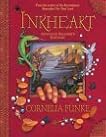
Inkheart by Cornelia Funke

Snore!

Harry Potter proved that young adults could read books of longer than 200 pages. It created a new world for young adult literature that is longer and more detailed. Inkheart emerged onto the scene playing heavily on the appeal of J. K. Rowling. And in my opinion, fell flat on its face. What a boring book. Cornelia Funke accomplished in 520 pages what she could have accomplished in 250. Rarely would I suggest an abridged version of a book, however in this case the only way I would give the Inkheart series to a child was if it were heavily shortened and tightened. This book will not encourage most readers and is not a good choice if trying to instill a love of reading in a youngster.

I feel guilty being that negative. I SO wanted to like this series. And I have specifically held off watching the movie until I had read the book. But in this instance I think cutting out all the extraneous unnecessary description to create a tight screenplay will improve the work.

Part of my hope for the series was that it revolves around a father and daughter who love books. They love to read. They are wholeheartedly invested in the world of stories and literature and losing oneself in a new world. How can all of that be bad?
When it goes nowhere.
The plot spins in endless circles with very little forward motion until I finally put Inkheart down and begged my husband to tell me what happened.

I am curious about one thing: Is this my failing as an American reader who has fallen into the trap of expecting action in every chapter? I hadn't initially realized that Inkheart is a German novel (although it helps to know that in the beginning. Otherwise the lack of setting up a locale is slightly disconcerting). I haven't read much German literature and would like to know if this is stereotypical. Do German novels focus on heavy description and move forward at a slower pace than an "average" American book? If anyone has any insight, please share.

* * * * *

If you would like more books like Inkheart try:

Sunday, November 22, 2009

The Lightning Thief (Percy Jackson and the Olympians #1) by Rick Riordan

I have mentioned before the I adore young adult fantasy. There is nothing more enjoyable than picking up a well-written, well-plotted fantasy that is fun and light without excessive violence, death, or sex. The Lightning Thief fulfills this exact category. It is engaging, a light read, and teaches something as well.

I would guess that Riordan had an idea for a book and discovered the mass appeal of the Harry Potter series. He took his idea and ran with it recognizing that a market existed. Trying to not sound like Harry Potter, there are moments when he set himself up as too obviously different. Instead of fleeing his family during the school year, Percy Jackson flees during the summer. Instead of no parents and evil extended family, Percy has the perfect sweet mother. Those moments don't take away from the book, but they did catch my attention.

Percy Jackson has ADHD and dyslexia - appropriate quirks for today's middle school reader. I like that Riordan describes those characteristics as signs of half-blood relationships to the Greek Gods. It's novel and a fun take on an old issue. Oh yeah, and if you haven't read the book - the main premise is that Percy Jackson is half Greek God.

Which brings up the main plot of the book. Riordan introduces his readers to a whole slew of classic Greek mythology: Zeus, Hera, Apollo, Aphrodite, Medusa. Although these are less relevant in today's world, I think its noble to introduce this world to kids. Knowing who Hermes is makes the FTD symbol at florist shops suddenly make sense. Riordan takes the classic tales and adapts them to the modern world. It's fun.

As far as appropriateness of this series for the kids themselves? My son's only six and he's too twitchy to listen to a story this long yet. But, I think it is a great series for boys - a group who has been ignored as readers until recently. I've been told that the further in the series the more death and destruction that occurs so parents may want to pre-read depending on their child's interests.

For me, I'm anxiously awaiting for the rest of the series to show up in my kids Scholastic flyers.

Sunday, June 21, 2009

The Book of Ember by Jeanne DuPrau

If I have an all-time favorite sub-genre of literature it is young adult science fiction. I eat the stuff up. I loved Philip Pullman's Dark Material's Trilogy long before The Golden Compass got made into a decent (but not great) movie . I'm a sucker for books like Lois Lowry's The Giver. One of the books on my to-read list is The Lightning Thief. So when my husband picked up The Book of Ember, I had no doubt it would make it to my reading list sooner rather than later.

I started The Book of Ember on Friday night and finished it Saturday afternoon. It is, after all, a children's/young adult book. But it is also a good engaging story that captures the imagination and encourages devouring the book. One of the appeals of young adult sci fi is that it has to be relatively fast-paced to appeal to a young reader. Plus, the stories tend to be shorter which leaves less room for the much more detailed description that science fiction authors often use to flesh out their storylines.

But shorter does not mean less well-developed. DuPrau has created an interesting and novel world for the first book in her trilogy. The great mystery of the world is not that difficult to figure out. The city of Ember lives in darkness aside from the electric lights that are run by a generator. But the lights are failing, supplies are in short supply, and the mayor is corrupt. Lina and Doon are some of the only citizens who seem to want to fix the problem and find a solution.

The characters in DuPrau's novel remind me of Lois Lowry's characters in The Giver - they question their world and no that something is amiss. They have a greater curiosity than normal which allows them a greater understanding of the world.

I will happily read the rest of the series. My husband asked if it was a good book to read to our 5 1/2 year old son. For some kids I think it would be: it's not too scary, there's nothing inappropriate. My son doesn't love chapter books yet, so I think we'll hold off for a while.

Thursday, February 12, 2009

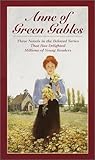
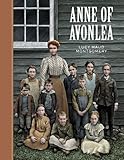
Anne of Green Gables & Anne of Avonlea by L. M. Montgomery

Somehow I made it to adulthood without ever reading L. M. Montgomery's infamous Anne of Green Gable series. I did watch the fabulous miniseries back in the day and enjoyed it thoroughly. Remembering the innocent plot, I bought all seven books when I thought I might have a daughter. No daughter, but the books sitting in my basement, I finally decided to pick up the first book. I liked it well enough that I immediately read the second one.

So much current fiction is emotionally loaded in an attempt to force the reader into a particular emotional catharsis having read the book. I find this frustrating as I prefer to choose my emotional tantrums myself. I knew I needed a break from this type of fiction which is in part why I picked up a book that was written 100 years ago. In addition, too much modern fiction feels the need to prove it's modernness by creating asocial, atypical families. Hmm... so I guess Anne of Green Gables family is likewise atypical, but it would definitely not qualify as modern dysfunctional.

What can I say, I fell in love. It's hard not to. There's a reason this series is still being published one hundred years later. The characters are innocent and lovable. The stories are light and amusing but still engaging. I read this book with pure joy and was happy to pick up the immediate sequel and stay engaged in the world for another week. By that time I was ready for a jump back to modern-day reality but I will definitely return to the world of Green Gables soon.

I did read this debating about its appropriateness as a chapter book for my sons. Although there are features that make this a "girl's" book, I think it would be appropriate and interesting for a young boy too. Anne's adventures reek of universal childhood curiosity. There is not an overwhelming focus on girly topics that would bore most boys. Montgomery does use flowery language, usually at the beginning of each chapter, which might highjack a nightly reading in order to define some of her terms. But that would be manageable. Montgomery originally wrote this series as a monthly episodic publication. Each chapter contains a complete short story. For this reason, the book would be ideal nightly reading.

In the first two novels Anne grows from age 11 to 17. Anne appears on Prince Edward Island as a young orphan. She is adopted by the brother and sister team of Marilla and Matthew Cuthbert. Matthew is quiet but loving. Marilla is much more outspoken and stricter. Anne has an uncanny ability to get into scrapes and difficulties, most of which are humorous and bring her to no immediate harm. In the second novel, Anne has returned to Green Gables as a sixteen year old high school graduate to teach at the local primary school. Again, she meets local characters and gets herself involved in social antics. It's hard to not walk away from these stories with a smile. They're engaging and make us remember a much more innocent world.