Monday, October 26, 2009

Mitla Pass by Leon Uris

I read Exodus about 18 months ago (check that, exactly two years ago, oddly enough) and found it fascinating. It was my first Leon Uris book; I looked forward to reading more. So, when I found Mitla Pass at the library book sale I picked it up. After reading some light fluffy novels I was ready for something a bit heavier and picked up Uris.

Like Exodus, Mitla Pass tells the story of Israel: the 1956 Sinai War with Egypt. But, in true Uris fashion, the character involved in the War is merely a backdrop to tell the story of Jews emigrating and trying to find complete lives in the first half of the twentieth century. All of the characters whose stories are told are the ancestors of Gideon Zadok, a Jewish novelist who has published an incredible bestseller and attempts to write a second.

The Zadok plot has the feel of an autobiography. Reading about the depths of involvement in writing and the emotions surrounding publication and searching for the next great novel intrigued me. If not autobiographical in the strictest sense, I could still see Uris using his own experiences strongly to make this character deep and believable. As an endeavoring author, I found Zadok's trials... inspiring sounds cheesy and over-stated. But honest, maybe. Writing is not a breezy past time, it is remarkably hard work. Uris demonstrates that extremely well.

The majority of the story centers on a variety of characters who are searching for a better life. They start in the Pale of Settlement and immigrate to Israel and the United States. Few of the characters ever find happiness. Few escape the trials of past Jewishness. Certain characters are catty and malicious. Others are deeply unhappy and bitter. It was hard to love Uris' characters in Mitla Pass. Does Uris do a good job showing the horrific plight for many of the worlds' Jewish population between the 1870s and the 1950s?
Undeniably.
That is what makes Uris great. But I had trouble engaging with and keeping focused on the plight of surly, miserable individuals who seemed to revel in their unhappiness.

I am glad that I read Mitla Pass. I feel better educated about Uris' world and the lived experiences of the Israelis. I would not necessarily recommend this book to others though. It is not one of his best. It drags and the characters are hard to relate to.

Sunday, October 11, 2009

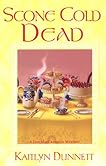
Scone Cold Dead by Kaitlyn Dunnett

A fellow bibliophile gave me the most amazing birthday gift: a book-of-the-month from her local mystery book store. She told the store owner what type of books I enjoy and every month the owner picks out a book that she thinks will fit my interest. Is that the coolest gift ever, or what? A book chosen just for l'il ole me from an indie bookstore. But I digress...

The first book I received was Scone Cold Dead by Kaitlyn Dunnett - a new author to me. My only minor complaint is that it is the second book in a series. My mom has trained me to start books from the first in the series and there is a bit of back story I would have enjoyed reading. But that's a very minor sticky-wicket.

In Scone Cold Dead, Liss, the main character is a retired Scottish dancer. When her troupe comes to town trouble arises due to the death of the troupe's manager - inhalation of mushrooms. Wanting to keep her friends free of suspicion, Liss begins to investigate the death and solve the murder. The location of the book in Moosetookalook, Maine is a fun setting. The plot revolving around a traveling dance troupe is also different enough to feel novel. I liked hearing about a world that is unfamiliar to me. The actual plot was not particular difficult to unravel. The murderer gives him/herself away pretty early in the story. It is not something I probably would have thought to buy for myself. But, I enjoyed it and was glad to be introduced to a new author.

However, I have a beef - and this probably comes out of my own desire to write and maybe eventually get published. The old adage is "write what you know," but we can't all know everything. Does a woman really know what it feels like to be a man? No. But that doesn't mean she doesn't include male characters. So where is the fine line between writing what we haven't personally experienced and just writing inconsistent characters?

I would bet a small sum of money that Kaitlyn Dunnett does not have children and is (by default) not a mother. Why? The one child in her book is poorly fleshed out. The age really did not ring true based on her actions. At times she acts much older than her age but then there are moments than she acts much younger - in unrealistic ways. And no mother would ever (I would hope) act like the mother in the novel. I cannot imagine a single mother willingly running out the door at the drop of a hat repeatedly to help her friend and leave her toddler son behind. I can appreciate the concept of suspension of disbelief in novels. After all, no one chases down murderers and solves crime willy-nilly in the middle of their day job. But I do want my characters to be believable in their interpersonal interactions. And, although they were side characters, these two figures leapt out at me for their inconsistency and unrealistic actions.

The character flaws are not a sufficient reason to avoid this book. They are more the other side of my brain reading the novel like a critic rather than an avid book-lover.

Friday, October 2, 2009

A Life of Her Own The Transformation of a Countrywoman in 20th-Century France by Emilie Carles

Although I am an academic by training, I don't often pick up a non-fiction book just for fun. I prefer to keep my reading light and unencumbered. When I do read non-fiction I find myself straying and often skimming. Not so with Carles' book. I really enjoyed reading it and found myself reading much more carefully than I sometimes do.

Carles lived through all of the most important historical events in the twentieth century. As a rural Frenchwoman she had a unique perspective that sheds light on how people viewed significant moments in history. What impacted her was not the big moments it was the small day-to-day goings on. The World Wars were important insofar as her family had to fight and live with soldiers occupying their small village. But the large political debates affected her not at all.

As I read I found myself wanting to copy passages for every modern history student I have taught. The personal trials that Carles underwent towards modernization defy imagination. In the early part of the century her pregnant sister refused to allow a doctor to examine her out of puritan prudishness. She died. Carles describes inexplicably astounding stories about the people that live in her valley - drunkenness and abuse and lack of care and love. That is not to suggest that the people were horrid. Instead Carles attempts to show how small and insular her world was and how removed from modern life. Much of her book revolved around her attempts to educate not just her school children but her society.

Whether you agree with Carles' socialist-leaning political ideology or not, her passion for her world make for a fascinating read. Near the end of the book, Carles does begin to preach to the reader about the problems that she sees with the France of her era. While it is interesting to see her perspective, it does not add to the strength of the story.

Chronicling the life of a rural French mountain peasant from pre-World War I until the late-1970s, this book encompasses so much. I will definitely keep A Life of Her Own on my shelf and can imagine using anecdotes if not excerpts in my classes in the future.

Wednesday, September 30, 2009

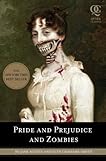
Pride & Prejudice & Zombies by Jane Austen and Seth Grahame-Smith

I tried. Really I did. I can employ suspension of disbelief and allow someone to take one of my favorite authors and bastardize her classic into a modern humorous zombie book. Really, I can.

But I still couldn't get all the way through Pride and Prejudice and Zombies.

Now my husband is giving it a go.

I had to at least reflect on why I didn't like it. After all, Graham-Smith is not disparaging Austen or her work. He is just updating and enhancing it. Giving it a tongue-in-cheek humorous twist. I can imagine it was really fun to write. How does one take Regency-era dialogue and add in zombies. That didn't bother me. My frustration was with the subtle changes that he made to Austen's work. The appeal of Austen is that she is so terribly nuanced. The turn of the head and the aside remark are what make her books amazing. The subtlety of the relationship between Elizabeth Bennett and Darcy - even if you know exactly what the outcome will be - is what keeps you reading. In his rendition Graham-Smith took away all of those nuances. He made the plot too in-your-face.

It is a funny book. I appreciate Graham-Smith's effort. But this Austen fan just couldn't get past the destruction of a classic (which says more about me than it does about the book).

Saturday, September 19, 2009

Bombay Ice by Leslie Forbes

India has always intrigued me. I would love to visit India. But the sad reality is that I would love to visit India in the mid-1860s. If only it was possible to see the world described by M. M. Kaye. Leslie Forbes' Bombay Ice was one of the first books I have ever read about current-day India. I have read books about Indians who leave India for Britain or the United States. But, unless my memory is favoring me, (which is entirely possible) I can't think of anything else that I have read which describes the current political and social situation in India - particularly in Bombay.

Which brings up a common question in my reading world. How accurate was this book? I would like for someone who lives in Bombay to read this book and tell me what they think. From the dust jacket it doesn't look as though Leslie Forbes has any personal experience with India so what led her to write this unusual novel? And more importantly, is her portrayal of Bombay true for everyone? true for a small minority? heavily exaggerated? The world she creates is depressing and dark. Do people really live like that on a daily basis in Bombay, India?

I will admit, the focus on Bollywood captured my attention. I have seen a few movies and remember a friend from college who had grown up on Bollywood so it is a world I would love to know more about. I liked how Forbes detailed the links between Hollywood and Bollywood, the focus on recreating Western classics, the continued interest in long-dead actors.

When all is said and done, I don't necessarily think I liked this book very well. It was a bit dark for my taste. I read more than my fair share of murder mystery, but I tend to lean toward the cozy side of things. Some of the imagery in this book was gag-worthy. The underworld that Forbes described thrives on gore in a way that I would rather not read about. But the excessive blood and guts was actually less bothersome than the distracting over-symbolism.

All books have some kind of symbolism, I suppose. Whether consciously written or created by literary criticists (or is it criticizers?) down the road I figure symbolism is just a part of literature. However picking two really detailed themes - meteorology and Shakespeare's The Tempest and returning to their connections to the novel ad nauseum got tiring. I finally hit a point that when monsoons, history of Chaos Theory or quotes about Prospero I began to skim. And I am not usually a skimmer. Had Forbes chosen one theme or another, I think I would have been okay. But choosing both together meant a lot of stream of consciousness style meandering while the main character considered her own belly button.

For die-hard mystery fans, a good mystery. For those interested in contemporary India, also worth a read. But for anyone just somewhat curious about the genre or the place this book will not hold your attention. I felt reading was slog-worthy which is relatively unusual for me.

Friday, September 11, 2009

Eggs in Purgatory by Laura Childs

I have read and enjoyed all of Laura Childs Tea Shop mystery books and her entire Scrapbooking Mystery series. Both are light, fun, enjoyable cozy mysteries.

(Ya know, every once in a while I have to stop and wonder that the books I describe as light and fun and enjoyable revolve around murder and violence.... But if you read cozies you know what I mean. Someone is dead, but there's not a lot of incest, or abuse, or difficult medical decisions involving the death of a family member. They're all about 'innocent' murders :-) Okay, ignore that aside. I just felt that it needed to stated.)

Anyway, my mom sent me the newest book in Childs' most recent series: the Cackleberry Club mysteries. Eggs in Purgatory is an interesting twist on the recent phenomenon of themed murder mystery series. Many books revolve around a central focus - knitting, cooking, dog shoes, bear collecting... you get the idea. The Cackleberry Club seems to combine a half a dozen different themes into one coherent story. The three main characters - middle-aged tough but lovable women - run a restaurant/bookstore/yarn shop. The restaurant serves tea and scones along with down home eggs and grits. They purchase locally produced products from the neighboring farm community. They have book and knitting groups and are planning a cake decorating contest.

Confused? Overwhelmed? Yeah, that's kind of how I felt. The jumbling together of every contemporary popular theme seemed a bit forced to me.

Nonetheless, I liked the characters. They were a bit grittier than the typical Miss Marple style sleuth. They had real problems and didn't hesitate to wield frying pans at ex-husbands and swear at obnoxious customers.

Oh wait. The point of the book is to solve a mystery in the middle of all of this cooking and book sorting. Yes, there's a mystery. Personally when the murderer stepped forward my first response was "who's that?" I appreciate leading the reader on different plausible paths to divert from the real killer but I was so completely diverted that the actual murderer hadn't made enough an impression on me to even be remembered.

All in all, diverting. But not one of Childs' best books.

Thursday, September 3, 2009

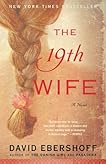
The 19th Wife by David Ebershoff

It feels like a long time since I last posted about a book that I read. Which is not because I haven't been posting. Nor is it because I haven't been reading. The book I was working on was just a really slow read for some reason. Enjoyable, but not the light fiction I had envisioned when I first picked it up.

I read about The 19th Wife in, of all places, the monthly Costco magazine. The subject matter - part mystery, part religious history - struck a chord and I went on a hunt to find the book. My mom found it first and read the copy before I could get to it. She enjoyed it, I think, but significantly less than I did. For her, she was tired of the subject matter. For me, the subject matter was completely unfamiliar and therefore fascinating.

So, what is the subject matter? Polygamy and the Mormon Church. The story follows two timelines: the mid-1800s during Brigham Young's lifetime and today. In both timelines there is a 19th wife, a woman who is one of a number of sister wives. The historical story revolves around a real individual who married Brigham Young then later divorced him and brought polygamy to the attention of the American public and the American government. The present day story revolves around a member of the Firsts (the polygamous cult in the Southwestern US who made national news two years ago) accused of killing her husband.

I was deeply fascinated because the book made me realize I know absolutely nothing about the Latter Day Saints, really. I am curious how a practicing Mormon would respond to Ebershoff's book. He does not paint historical Mormonism in an uplifting light but he does portray current day Mormons much nicer (that seems like a very blanket, blah term but it seems apropos). He spends a significant amount of time attempting to explain the schism between the Mormons and the Firsts and acknowledging that the two groups are far from the same. Yet, because of the history he tells there is an obvious shared timeline.

I also found the organization of the story unusual. The contemporary timeline reads like a traditional novel. But thrown in between are chapters that read more like historical sources that a scholar would use to do research - including a very apt Wikipeda entry. On the one hand, it slows the book down because there is a continual jump in character and style of writing between the past, the present, the scholarly, and the novelistic. On the other, it gives a weightiness to the story because it is very obviously based in fact.

Ebershoff does admit that his historical sections are fictional recreations based on fact as opposed to historical "Truths". As I said earlier, this book made me want to read more. I would love to take his story and weigh it against other scholarly sources to see how they compare. And, I would love to get an 'insider's' impression of what Ebershoff has depicted of the history of Mormonism.