Showing posts with label Classics. Show all posts

Thursday, July 8, 2010

The Shipping News by Annie Proulx

I don't appear to be genetically created to appreciate literary award winners. The Shipping News won the Pulitzer prize after all and yet I found it... boring, honestly. Okay, I am glad that I read it now that I'm done. But it was not a book I enjoyed reading. I can understand why it was award winning when it comes to novelty of style and setting the stage for the plot. But the plot itself is just not very interesting.

The story of The Shipping News revolves around a single father, Quoyle, who finding himself at loose ends moves with his aunt and his two young daughters to a small village in Newfoundland. Although he has never been there before his family is from there and still owns property in the area. Quoyle is an accidental journalist who becomes involved in the town's life while writing the news of the boats coming in and out of port.

Proulx has a unique writing style. At least half of her sentences are fragments. They evoke distinct imagery and the purpose of her style is clear. Yet if 90% of writers tried to emulate Proulx's writing they would be kicked out of school for poor use of language. While I appreciate the idea behind her voice I personally did not find it engaging to read. As a book lover I found it discouraging that every five pages I was more inclined to set the book down and find something else to do rather than keep reading. Last night I had to force myself to focus just to get through the final 30 pages of the story. It is rare that I am that unengaged in a book. Once again I am guessing I am alone in my views on this book. Friends raved about it and gave it to me encouragingly. Other reviews I have seen give it an overwhelming thumbs up. Maybe I just need to realize that I don't appreciate "novelty" and "literary qualities" in my book reading.

I am glad I read The Shipping News. I gave it points for uniqueness and novelty of voice. But the story itself just never caught my attention. To me plot overrides writing style. What can I say, I guess I'm just an action-oriented girl.

Friday, February 12, 2010

Charlie and the Chocolate Factory by Roald Dahl

There is no denying I'm a bibliophile. So I love the idea of introducing my kids to books. And now that they're getting a little bit older I am anxious to delve into the chapter books I adored as a child - as well as all the great new classics.

Unfortunately, my eldest has not been interested. He complains if there is not a picture on every page. He will listen to two or three chapters and then put a book aside for three months without asking for it. If we suggest returning to the book he complains and picks out a picture book. He's 6, he's justified. It will change eventually.

For Christmas, Eldest got the Roald Dahl box set. I know many of the titles although I never read any of them myself. Last month Eldest picked out Fantastic Mr. Fox - based purely on the fact that he had heard of the movie. He thoroughly enjoyed it, in part because Dahl's books have enough pictures to satisfy him but enough text to tell a real story. After finishing it he told me he no longer needs a picture on every page. He has not yet asked to see the film - which we won't see until he's a bit older. (It was not my favorite story, but I was thrilled to see him getting into a longer book.)

Three days ago he brought me Charlie and the Chocolate Factory. We curled up and read the first two chapters. He liked it. That night dad read chapters 3 and 4. Again, he sat quietly and listened. Over the next couple of days we read the next few chapters.

Yesterday he and I were still stuck inside thanks to the everlasting snowstorm. I suggested he bring his book down. We curled up on the couch and I started reading. We got through chapter 10 and I kept going. In chapter 11 Charlie finds the Golden Ticket. Eldest's legs began to twitch. Then they began to bounce. When Charlie found the ticket Eldest jumped up and gave me a giant hug. "Keep reading, keep reading, keep reading!"

His next questions, "What time do we have to pick up Youngest? Can we read until then?"

At bedtime last night we started Chapter 17. This morning I woke up to Eldest standing over me grinning with Charlie and the Chocolate Factory thrust in my direction.

Thank you Roald Dahl!

Thursday, July 2, 2009

Tender is the Night by F. Scott Fitzgerald

In college I decided to read The Great Gatsby. I didn't feel I could consider myself a well-read American having never read any Fitzgerald. At the time (and really to this day), I didn't get the appeal. The light at the end of the dock never did anything for me. I never liked Gatsby or any of the other characters. The book stood out as nothing more than one of those Classics that everyone was supposed to read and love because they were told to, not because they genuinely had any affection for the storyline. (I'm not saying people who really enjoy Fitzgerald are wrong, I'm just saying I never got the appeal).

More recently I have wanted to learn more about life in 1920/30s America. As such I have picked up a handful of novels about the interwar era written by authors of the time. I find I get a much better sense of the people and the time with a novel than with a history text. One such book was Tender is the Night. I read it on a plane on the assumption that it would be good for me, but I wouldn't really enjoy it. Happily, I was wrong. I REALLY liked Tender is the Night and for the first I time understand and appreciate Fitzgerald as a classic, worthy American literary author.

Tender is the Night revolves around a psychiatrist and his schizophrenic wife who travel around Europe chasing happiness. While the characters might not seem to resemble Fitzgerald and Zelda, the book is largely autobiographical. Fitzgerald used a number of events in the story that really happened to his family. It is the honesty of life for American ex-pats in this book that I enjoyed. Fitzgerald really captured the aimlessness of the people living in that era who flitted from city to city searching for meaning.

More than the plot, however, I found Fitzgerald's writing style dynamic and engaging. He has a descriptive ability that I find lacking in many modern authors. He can say in one or two words what takes many authors a full sentence, if not a paragraph. After reading Tender is the Night, I would like to pick up more Fitzgerald to analyze his descriptive talent.

Moral of the story: don't assume every book by an author is bad (or good, for that matter) based on the "Classic" that is over-used, over-quoted, and force fed to school students. Some of the other books might be much better.

Monday, March 23, 2009

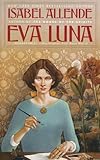
Eva Luna by Isabel Allende

I went to high school at a point when mainstream literature was being replaced by so-called "minority literature." The long and short of it was that I read almost no worthwhile literature for three years - either mainstream or minority. I have made an effort in the years since high school to remedy my lack of literary education and read as many of the high school classics as I missed - both mainstream and minority (although I honestly don't understand the definitions of mainstream and minority but that is a whole different conversation).

I picked up a copy of Eva Luna at the library book sale and left it on my bookshelf until this month. It is the first example of Magical Realism that I have read (I saw Like Water for Chocolate but never read the book). It was fascinating. I heartily enjoyed it. I'm thrilled to have read a piece of good literature. But... (there has to be a but or else it wouldn't merit a blog post, right?)

I found that Eva Luna was hard to read consecutively. It is NOT light reading like what I often read. The amount of detailed description while integral to the story and enjoyable because it was so different from typical American lit was heavy and had to be absorbed in parts. I found that it was best read on my way to and from work. Otherwise I was likely to put the book down and look for something else to read. Maybe that makes me non-literary, but there you have it.

The topic of the book was incredibly fascinating. Eva Luna spans the decades from World War II to the 1980s. The two main characters Eva and Rolf Carlé live through a decided number of historical events including the end of World War II and the creation of democracy in Latin/South America. I had to read up on Allende's work to see if she described the political workings of any specific South American country. It appears that the story is fictional but is most similar to Chile and Venezuela.

The characters with whom Eva interacts and the worlds that they inhabit are so starkly removed from contemporary America that it is hard to comprehend their mores and beliefs. Nonetheless, I feel like I have a slightly better understanding for what life is like in the non-Western world. In addition, the book is humorous and has fun characters like Mimi that are so different from American lit as to be deeply intriguing.

I will definitely pick up more Magical Realism. But I would never pretend that it is a light read that I can enjoy while my children run around me. It is the kind of book that takes full attention.

Sunday, February 22, 2009

BBC's "The Big Read"

Like many other Facebook users, I took the bait and made a note for the "What does the BBC know?" meme. The instructions stated: "Apparently the BBC believes most people will have only read 6 of the 100 books here. How do your reading habits stack up?". When I read it I wondered about the utter randomness of the books on the list. It includes "Complete Works of Shakespeare" and then separately has "Hamlet." I could not reconoiter a rhyme or a reason for the books on the list. So I began googling and discovered that it seems to be impossible to track down this list Someone created it on a whim.

However, there is a BBC list of 100 books which exists. It is called "The Big Read" and according to the BBC:

In April 2003 the BBC's Big Read began the search for the nation's best-loved novel, and we asked you to nominate your favourite books.

Here is the real BBC list. Like the Facebook meme I have included

X for the books that I have read
/ for books that I started but did not finish
* for books that I would like to read
@ for books that I strongly disliked

1. The Lord of the Rings, JRR Tolkien /
2. Pride and Prejudice, Jane Austen X
3. His Dark Materials, Philip Pullman X
4. The Hitchhiker's Guide to the Galaxy, Douglas Adams X
5. Harry Potter and the Goblet of Fire, JK Rowling X
6. To Kill a Mockingbird, Harper Lee X
7. Winnie the Pooh, AA Milne X
8. Nineteen Eighty-Four, George Orwell X
9. The Lion, the Witch and the Wardrobe, CS Lewis X
10. Jane Eyre, Charlotte Brontë X
11. Catch-22, Joseph Heller /
12. Wuthering Heights, Emily Brontë X
13. Birdsong, Sebastian Faulks
14. Rebecca, Daphne du Maurier X
15. The Catcher in the Rye, JD Salinger X
16. The Wind in the Willows, Kenneth Grahame
17. Great Expectations, Charles Dickens X
18. Little Women, Louisa May Alcott X
19. Captain Corelli's Mandolin, Louis de Bernieres *
20. War and Peace, Leo Tolstoy
21. Gone with the Wind, Margaret Mitchell X
22. Harry Potter And The Philosopher's Stone, JK Rowling X
23. Harry Potter And The Chamber Of Secrets, JK Rowling X
24. Harry Potter And The Prisoner Of Azkaban, JK Rowling X
25. The Hobbit, JRR Tolkien /
26. Tess Of The D'Urbervilles, Thomas Hardy
27. Middlemarch, George Eliot /
28. A Prayer For Owen Meany, John Irving X
29. The Grapes Of Wrath, John Steinbeck
30. Alice's Adventures In Wonderland, Lewis Carroll
31. The Story Of Tracy Beaker, Jacqueline Wilson
32. One Hundred Years Of Solitude, Gabriel García Márquez
33. The Pillars Of The Earth, Ken Follett X
34. David Copperfield, Charles Dickens
35. Charlie And The Chocolate Factory, Roald Dahl X
36. Treasure Island, Robert Louis Stevenson
37. A Town Like Alice, Nevil Shute
38. Persuasion, Jane Austen X
39. Dune, Frank Herbert X
40. Emma, Jane Austen X
41. Anne Of Green Gables, LM Montgomery X
42. Watership Down, Richard Adams /
43. The Great Gatsby, F Scott Fitzgerald X@
44. The Count Of Monte Cristo, Alexandre Dumas
45. Brideshead Revisited, Evelyn Waugh
46. Animal Farm, George Orwell X
47. A Christmas Carol, Charles Dickens
48. Far From The Madding Crowd, Thomas Hardy
49. Goodnight Mister Tom, Michelle Magorian
50. The Shell Seekers, Rosamunde Pilcher

51. The Secret Garden, Frances Hodgson Burnett
52. Of Mice And Men, John Steinbeck
53. The Stand, Stephen King X
54. Anna Karenina, Leo Tolstoy /
55. A Suitable Boy, Vikram Seth X
56. The BFG, Roald Dahl
57. Swallows And Amazons, Arthur Ransome
58. Black Beauty, Anna Sewell
59. Artemis Fowl, Eoin Colfer X
60. Crime And Punishment, Fyodor Dostoyevsky
61. Noughts And Crosses, Malorie Blackman
62. Memoirs Of A Geisha, Arthur Golden X
63. A Tale Of Two Cities, Charles Dickens X
64. The Thorn Birds, Colleen McCollough
65. Mort, Terry Pratchett
66. The Magic Faraway Tree, Enid Blyton
67. The Magus, John Fowles
68. Good Omens, Terry Pratchett and Neil Gaiman X
69. Guards! Guards!, Terry Pratchett
70. Lord Of The Flies, William Golding X
71. Perfume, Patrick Süskind
72. The Ragged Trousered Philanthropists, Robert Tressell
73. Night Watch, Terry Pratchett
74. Matilda, Roald Dahl
75. Bridget Jones's Diary, Helen Fielding
76. The Secret History, Donna Tartt *
77. The Woman In White, Wilkie Collins X
78. Ulysses, James Joyce
79. Bleak House, Charles Dickens
80. Double Act, Jacqueline Wilson
81. The Twits, Roald Dahl
82. I Capture The Castle, Dodie Smith
83. Holes, Louis Sachar X
84. Gormenghast, Mervyn Peake
85. The God Of Small Things, Arundhati Roy
86. Vicky Angel, Jacqueline Wilson
87. Brave New World, Aldous Huxley X
88. Cold Comfort Farm, Stella Gibbons
89. Magician, Raymond E Feist
90. On The Road, Jack Kerouac
91. The Godfather, Mario Puzo
92. The Clan Of The Cave Bear, Jean M Auel X
93. The Colour Of Magic, Terry Pratchett X
94. The Alchemist, Paulo Coelho
95. Katherine, Anya Seton
96. Kane And Abel, Jeffrey Archer
97. Love In The Time Of Cholera, Gabriel García Márquez
98. Girls In Love, Jacqueline Wilson
99. The Princess Diaries, Meg Cabot
100. Midnight's Children, Salman Rushdie


I have never heard of Jacqueline Wilson, but she must be popular in Britain.
I have read 39 books on this list.
Enjoy!

Thursday, February 12, 2009

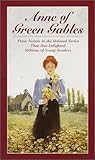
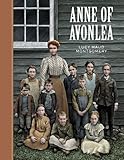
Anne of Green Gables & Anne of Avonlea by L. M. Montgomery

Somehow I made it to adulthood without ever reading L. M. Montgomery's infamous Anne of Green Gable series. I did watch the fabulous miniseries back in the day and enjoyed it thoroughly. Remembering the innocent plot, I bought all seven books when I thought I might have a daughter. No daughter, but the books sitting in my basement, I finally decided to pick up the first book. I liked it well enough that I immediately read the second one.

So much current fiction is emotionally loaded in an attempt to force the reader into a particular emotional catharsis having read the book. I find this frustrating as I prefer to choose my emotional tantrums myself. I knew I needed a break from this type of fiction which is in part why I picked up a book that was written 100 years ago. In addition, too much modern fiction feels the need to prove it's modernness by creating asocial, atypical families. Hmm... so I guess Anne of Green Gables family is likewise atypical, but it would definitely not qualify as modern dysfunctional.

What can I say, I fell in love. It's hard not to. There's a reason this series is still being published one hundred years later. The characters are innocent and lovable. The stories are light and amusing but still engaging. I read this book with pure joy and was happy to pick up the immediate sequel and stay engaged in the world for another week. By that time I was ready for a jump back to modern-day reality but I will definitely return to the world of Green Gables soon.

I did read this debating about its appropriateness as a chapter book for my sons. Although there are features that make this a "girl's" book, I think it would be appropriate and interesting for a young boy too. Anne's adventures reek of universal childhood curiosity. There is not an overwhelming focus on girly topics that would bore most boys. Montgomery does use flowery language, usually at the beginning of each chapter, which might highjack a nightly reading in order to define some of her terms. But that would be manageable. Montgomery originally wrote this series as a monthly episodic publication. Each chapter contains a complete short story. For this reason, the book would be ideal nightly reading.

In the first two novels Anne grows from age 11 to 17. Anne appears on Prince Edward Island as a young orphan. She is adopted by the brother and sister team of Marilla and Matthew Cuthbert. Matthew is quiet but loving. Marilla is much more outspoken and stricter. Anne has an uncanny ability to get into scrapes and difficulties, most of which are humorous and bring her to no immediate harm. In the second novel, Anne has returned to Green Gables as a sixteen year old high school graduate to teach at the local primary school. Again, she meets local characters and gets herself involved in social antics. It's hard to not walk away from these stories with a smile. They're engaging and make us remember a much more innocent world.

Tuesday, February 3, 2009

The Demolished Man by Alfred Bester

I recently posted on the best books of the 20th Century. There is no doubt that The Demolished Man deserves to be added to the list. It is an amazing piece of science fiction that has survived time better than a lot of books written in the past ten or twenty years. I cannot give this book high enough praise.

A few years ago my husband handed me The Stars My Destination by Alfred Bester. Over the years I have continued to remember individual scenes in that story. They were unique and realistically futuristic. So when my husband handed me another book by Bester I was happy to start reading.

Alfred Bester is NOT a well known name among many science fiction readers. He does not have the memorability of Philip Dick or Isaac Asimov or Ray Bradbury. Yet, he should. I would suggest that he is one of the best classic science fiction authors around. The Demolished Man won the first Hugo Award after its publication in book form in 1953. Bester's books remain fresh and intriguing over 50 years later.

The Demolished Man is the story of a murder and the police attempt to track the murderer. The book fits exactly into the world of pulp fiction that was being written by plenty of authors in the 1950s. But what makes Bester's novel original is the use of ESP "Peepers" police to track the murderer. The story floats back and forth between Ben Reich, the murderer, and Prefect Powell, the detective.

Bester gives just enough detail to make the story compelling and keep it moving. But, he does not fall into the trap of giving so much detail to overly-date the book. He introduces a computer to help solve the crime - it is a bit unrealistic I suppose - but he keeps it generic enough that a reader today isn't laughing outright and how far off the author was 50 years ago.

Bester clinches the book in the final few pages. Again, he doesn't lay out the details, but he hints just enough to really force the reader to read again and go back and reevaluate the whole story.
If you're a Science Fiction fan, like classic sci fi, and have never read Alfred Bester, go out and buy his books now! They're worth it.

Sunday, December 28, 2008

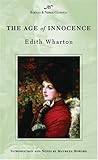
The Age of Innocence by Edith Wharton

I have wanted to read more classic American literature. It was an area where I have a distinct deficit due to a less than traditional high school American lit teacher and class. But, now that I'm older, I can pick and choose. Not too much Great Gatsby or Hemingway on my shelf, but I will happily read the books that look interesting to me. My continuing fascination with the 1920s and 30s led me to pick up a Wharton novel and one by Willa Cather. I suggested Age of Innocence to my reading group in good conscience, but come early December I just didn't get around to reading more than the first couple of chapters (honestly, no body did.)

But, I persevered and picked up the book nonetheless, and I'm glad that I did. Age of Innocence is a great look at the upper-class American world in the late-nineteenth century. The dilemma or marrying for social standing and expectations while loving on the side resonate. They mores of the era were so different from the way that we live today that it made me really stop and think about how and why we live the way that we do today. When did it become acceptable to speak our mind - always, regardless of who we might offend? When did marriage become dictated as a purely love connection? And is it a coincidence that divorce skyrocketed in this same time period? Did the nineteenth century have something right that we now lack?

Wharton's writing reminded me of Jane Austen. She has a cutting commentary on her life and society. But, like Austen, she does not need to be blunt and crass to describe that world. Her subtle innuendos and her turn of phrase say significantly more than the in the face attitude of contemporary writers. Her style of writing, however, does not lend itself to a quick beach read. Age of Innocence is a relatively slow book, not the least because of the expectations she makes about her audience. She inserts very detailed architectural, literary, and artistic details to describe her characters which are not obvious to 21st century readers.

Having finished Age of Innocence, I would like to read more Wharton. I think she paints a very clear picture of her world and I feel as though I have a better sense of the world that she inhabited. I will definitely keep her on my list for further reading.

Thursday, October 2, 2008

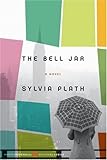
The Bell Jar by Sylvia Plath


I find myself completely stymied when I try to write about my response to The Bell Jar. I can't imagine what I might have to add to a book that has been discussed by so many people over the past fifty years. People have written dissertations about Sylvia Plath and her personal experiences. My first introduction to The Bell Jar was my dad's use of it in his high school English classes. This is one of those works of *literature* that I have wanted to read but up until now had never gotten around to. I knew enough about the topic that attempted suicide was a theme and therefore I had waited to read it until I was in the right frame of mind for a less than uplifting book.

In fact, I found the themes of The Bell Jar to be more interesting and relevant than I had assumed. To me, Plath has done an incredible job describing the stresses of mid-American life for post-adolescent women. The concerns about sexuality, the feeling of inadequacy based on gender, the discontent with understanding psychological problems all appeared strikingly well in this book. Plath has done a remarkable job at allowing the reader to enter the mind of a woman whose life is at odds with the culture in which she lives. In many ways the characters disenchantment with society is not only understandable it is possibly even laudatory (not that I am advocating attempted suicide, but I can imagine the isolation and discontent that the character felt within her enclosed world and the outlet that she chose based on her experiences).

Moreover, Plath's poetic talent resound in the writing of the book. In very few words Plath succeeds in painting a panoramic picture of both the world in which she lives and the internal conflict of her protagonist. I found myself examining her use of terminology to describe in short order a detailed scenario. Plath's description of characters in particular resonated to me. I could imagine the smallest detail of individuals like Buddy and Joan although Plath never fell to describing them carefully.

Having read The Bell Jar, I am curious to know more. I did a quick internet search on the book to answer a few questions about the text that left me curious. I would now like to go back and read her poetry. I am also intrigued to read a biography of Sylvia Plath to compare to The Bell Jar in order to better understand where fiction met autobiography in her work.

To me The Bell Jar is a seminal work in twentieth-century American literature. Everyone should have to read it. Although it was first written over fifty years ago, many of the themes remain relevant today. I can imagine scenarios in which I would hand this book to a college age woman who was undergoing a stressful period while trying to find her place in society. The book is much less fatalistic and depressing than I had feared. Although Plath did take her own life, the book ends on an optimistic note suggesting that the main character had overcome the challenges that had shaken her so strongly.

Wednesday, August 6, 2008

I am Legend by Richard Matheson

My husband and I picked up I am Legend after seeing the movie of the same name. The movie was SCARY!! I like sci fi but I'm not a big horror fan. Writing in the 1950s, Matheson's book is suspenseful, but not gory like more modern horror has become. Part of what interested my husband and I in picking up the book was the quote on the back, "Books like I am Legend were an inspiration to me." - Stephen King.
My husband loves classic science fiction and is always curious to see how it holds up over time. He has become quite knowledgeable about post-World War II era books. I am Legend clearly fell into that category. He read the whole book - which includes the I am Legend novella as well as a handful of Matheson's other short stories. He guesses that some of the other stories have been adapted over time to be storylines in X-Files or various other sci fi shows. Personally, having read one or two of the short stories they really didn't hold my attention. But I digress...
I read I am Legend curious to see how much had been changed and adapted to turn it into a 21st century film starring Will Smith. Like many adaptations recently, there were scenes that were word for word identical to the book. Then there were entire plot arcs that had absolutely nothing to do with the original story. The long-term outcome of the movie and the novella were completely different. So much so that the purpose of the title had to change between the two formats.
Matheson's decision to write about vampires in the 1950s - much before our current Anne Rice/Buffy obsession with the creatures - made for an engaging story. In good science fiction style he relies heavily on a biological, scientific explanation for his plot - at times going into too great a detail. But, at the final moment, I would have to say, I liked Matheson's finale better than the Hollywood version. It led to a much more introspective ending. I put the book down with a "Hmm." I always like a book that makes me think.

Wednesday, October 31, 2007

Exodus by Leon Uris

The Palestinian/Israeli conflict seems to be following me this fall. I have had more than one long conversation about the history and the current reality of the situation. Technically, I was trained in grad school to teach the subject. I never would have presented myself as an "expert" or even particularly knowledge about the region and the conflict. However, as I have taught it I have discovered that I do know a lot more about what happened than the average American citizen. However, most of my reading is academic, relatively dispassionate prose about dates and events and responses. Dispassionate is a relative term when talking about Palestine/Israel because anyone who knows the name has an opinion - and usually a very strong opinion about who is wrong and who is right. My university training tended towards a pro-Palestinian stance. I am thankful for that because it allows me to play the devil's advocate in a society that leans towards pro-Israeli beliefs. My own view is uncertain. I feel that there is much too much history to be able to convincingly feel more overt sympathy for one side of the other.
Anyway, that's a long introduction to Leon Uris's book. I picked it up off my shelf, having acquired it by way of my brother. I talked to my mother about the story and she read it sometime in 1963. I am very glad that I read Exodus, but I also have some cautionary fears about introducing a book written in 1958 to today's audience.
Exodus is the story of the creation of the state of Israel. Backtracking through the lives of multiple characters, Leon Uris explains how Jews ended up in the Middle East in the 1940s. His historical knowledge about the ghettos of Poland, the concentration camps of Germany, and the Pale of Settlement seems spot on. There is little that I could find to fault him for and I resoundingly recommended the book to a Jewish student who is curious to learn more about Israel. It is a fascinating read.
However, Uris's perceptions of the Arabs is significantly less historically accurate - to say the least. This is the point in which the book is dated. The Arabs are portrayed in the most stereotypically Orientalist terms possible. The Christian Arabs are sympathetic, but the rest smell bad, are traitorous, have absolutely no morals, and are all identical. The Jews are absolutely, no questions asked, correct in their takeover over the Holy Lands. The "Moslems" are completely wrong because, in Uris's descriptions, they have no love of the land and no ability to care for it. I believe there is some historical accuracy in what he has written, but I would like to think that were he to have written his book forty years later, he would have recognized his universalist dismissal of a people and given the Arabs more credit.
One of the best reasons to read this book is to get a better understanding of the role that the British played in further heightening the tension in the region. Uris shows how the political, religious, and moral dilemmas that the British faced created the conflicts that exist in the region down to today.
I would be very curious to know how, if at all, Uris's views of Israel changed in the 40 years between writing Exodus and his death in 2003. The Palestinian/Israeli region remained mired in conflict and obviously continues to be a major source of tension today. At the very least, reading this book has reaffirmed the need to teach people the history of the Holy Lands in order to allow people to take an educated stance on the continued crisis. But, I would hesitate to recommend Exodus to a dyed-in-the-wool pro-Israeli because Uris's stereotypes of the Arabs will only further confirm their belief that the Palestinians are "evil" and the Jews are not.

Thursday, September 27, 2007

Classic Book Series for Kids

My son just turned four. I would guess that he will begin to read on his own during the next year. Don’t quote me on that, but his interest in words and letters gives me the sense that it is brewing in his brain. Yesterday he asked me to read him a birthday card and he wanted to follow along, finger under each word, as I read. Seeing his interest in reading, I want to introduce him to books that will really catch his interest and make him want to read. I find that the easiest way to verify a book’s quality is to have read it myself, usually as a kid.

I would never limit the books that my sons picks out at the library (well, there are titles that I convince him to pass over), but when I buy him books I find that I return again and again to the classics that I knew. Everyone knows these stories, but I’ll mention them anyway:

Clifford: nothing beats a good Clifford story. There are so many more than there were in the 1970s. Clifford talks now. And he has friends who talk. But, not to Emily Elizabeth, only to each other. The stories are timely – there is one for every traditional American holiday. They all have a good message – usually about the importance of friendship. Some even introduce topics that parents need to discuss with their children like fire safety. And they are easy to read in one sitting without losing a child’s attention.

Curious George: We got my son a gift pack of 12 Curious George stories for Christmas last year. Much to my dismay, none of these stories were written by H. A. Rey. They were written, so far as I can tell, by a computerized program where the key idea had to be that “George is a good little monkey, but always very curious.” Nonetheless, they appeal to my son immensely. Every little boy (and girl? I only have boys so I’m guessing here) gets in trouble for an innate curiosity. So they can relate to George. Often his antics seem innocent but the books do a good job of explaining why George’s choices were the wrong ones. And again, they are easy to get through in one sitting and he loves the pictures.

Berenstain Bears: We have just started reading these books. They are longer and have many more words than the other series. But, the messages in them are really good. Right now we’ve only read a book about “Best Friends” and another about “Trouble with Money.” The morals are obvious for an adult, but they are the kinds of issues that I know are on my son’s mind. Money is something he is just beginning to grapple with – a lot of questions about what it is, where we get it, why we go to the bank. And friends are also key for him. Who are his friends? When does he get to see his friends? How does he balance his wants and his friends’ needs? These don’t get read as often as they are longer. My four-year old likes them, but my younger son loses patience. But, I caught them looking at the covers on the back of the book and figuring out which ones they had already read and which ones they wanted to pick out next.