Sunday, December 28, 2008

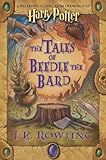
The Tales of Beedle the Bard by J. K. Rowling

As a Harry Potter fan, how could I not pick up and read the well-advertised newest book by J. K. Rowling. My husband read it first, in one sitting. So, I was not expecting a long read. I picked up Beedle the Bard one evening when I couldn't lay my hands on my copy of Age of Innocence. And like my husband, I read it in one sitting. Part of my motivating in reading Beedle the Bard was my husband's mention that we could possibly read it to our 3 and 5 year old boys. The lengths of the stories would be perfect for bedtime stories.

For me, the stories were entertaining. The best part of the book was Dumbledore's commentaries on the story. As a probably too discerning reader, I felt like Rowling was setting herself up for an unwinnable task. Writing fairy tales that set up the foundation for literature in the world is a weighty task. Trying to create a new version of Cinderella that has all the characteristics of good and evil, the moral at the end, and the enduring narrative that resonates with generations - that's no small feat. In that, I don't know that Rowling succeeded. The story I liked the best was the story that had originally appeared in the Harry Potter series. It seemed the most well conceived.

As for reading the stories to my kids: same thing. I know I'm overly protective of my boys and try to keep violence at bay, but I didn't find the stories compelling enough to keep their interest while simultaneously downplaying and ignoring the inherent violence in them. Don't get me wrong, every fairy tale has violence. But in Cinderella you don't focus on how the mother died - it's just a background plot point. The violence in the wizarding stories are a bit more up front.

All in all, not a bad book. There's a bit of me who feels like Rowling is just writing in the Harry Potter world because its easier and she can keep making money. But, I read the description of the foundation who this book supports and I laud her efforts to make a difference.

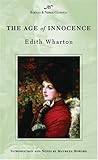
The Age of Innocence by Edith Wharton

I have wanted to read more classic American literature. It was an area where I have a distinct deficit due to a less than traditional high school American lit teacher and class. But, now that I'm older, I can pick and choose. Not too much Great Gatsby or Hemingway on my shelf, but I will happily read the books that look interesting to me. My continuing fascination with the 1920s and 30s led me to pick up a Wharton novel and one by Willa Cather. I suggested Age of Innocence to my reading group in good conscience, but come early December I just didn't get around to reading more than the first couple of chapters (honestly, no body did.)

But, I persevered and picked up the book nonetheless, and I'm glad that I did. Age of Innocence is a great look at the upper-class American world in the late-nineteenth century. The dilemma or marrying for social standing and expectations while loving on the side resonate. They mores of the era were so different from the way that we live today that it made me really stop and think about how and why we live the way that we do today. When did it become acceptable to speak our mind - always, regardless of who we might offend? When did marriage become dictated as a purely love connection? And is it a coincidence that divorce skyrocketed in this same time period? Did the nineteenth century have something right that we now lack?

Wharton's writing reminded me of Jane Austen. She has a cutting commentary on her life and society. But, like Austen, she does not need to be blunt and crass to describe that world. Her subtle innuendos and her turn of phrase say significantly more than the in the face attitude of contemporary writers. Her style of writing, however, does not lend itself to a quick beach read. Age of Innocence is a relatively slow book, not the least because of the expectations she makes about her audience. She inserts very detailed architectural, literary, and artistic details to describe her characters which are not obvious to 21st century readers.

Having finished Age of Innocence, I would like to read more Wharton. I think she paints a very clear picture of her world and I feel as though I have a better sense of the world that she inhabited. I will definitely keep her on my list for further reading.

Saturday, December 6, 2008

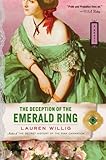
The Deception of the Emerald Ring by Lauren Willig

Lauren Willig has made a fine career out of her Pink Carnation series. She started the book while she was writing a dissertation in English History at Harvard. By the publication of this book, Willig had decided to ditch the PhD, attend law school and now works as a lawyer during the week and writes during the weekend. What does that choice say about the state of affairs of academia? But, that's a whole 'nother post?

The Deception of the Emerald Ring is the third in Willig's series. Each of the books stars Eloise, a history grad student doing research in England to write a dissertation on English spies in the eighteenth century. A small portion of the book revolves around Eloise and focuses on her lack of a love life. These sections of the book are very cliched, light, chic-lit. The majority of the stories take place in Napoleonic-era England and follow the lives of the spies that Eloise is researching.

In the third installment, Letty, a nineteen year old with a perfect beautiful siste, ends up through miscommunication and hijinks, married to Geoffrey Pinchingdale, one of the many spies. Set up as a typical romance, Geoff and Letty hate one another. Through the course of the book they both realize how much they do in fact respect and love one another. By the end, everyone is happy, in love, and content with their lives.

So, if the books are so cliched, why do I keep reading them? Because Willig has a great sense of humor and has no problems turning that cynical humor on herself and on her chosen field (or, not so chosen anymore). Willig knows that she is writing stereotypical romance and plays up the interaction in a fun way. She pokes fun at the trite dialogue and the watery descriptions. More than that, the stories are amusing. I find myself engaged and anxious to keep reading. While I know that everyone will be happy in the end, sometimes it's nice to just sit back and enjoy the suspense while they all figure out how to make themselves content.

While I won't go out of my way to track down the fourth installment in the Pink Carnation series, I know that one of these days I will find myself, text in hand, happily reading about the further adventures of the flower spies. Lauren Willig's books make for great, light reading. A nice break from the stress of the holidays.

Thursday, December 4, 2008

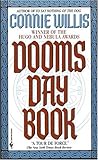
Doomsday Book by Connie Willis

The Doomsday Book has been sitting on my bookshelf for probably three years. I have been waiting for the perfect moment to read it. I have read all of Connie Willis' short stories and most of her other novels but sat on The Doomsday Book. The timing was never just right. For whatever reason, I finally picked up Willis' chef d'oeuvre a couple of weeks ago and spent much longer than normal working my way through it (Thanksgiving and a visit from parents slowed down my reading, but this is NOT a quick book.) I have no idea what mad the time "right" this time, but I'm thrilled that I did finally pick it up and read.

Doomsday Book has the honor of being one of the only books to have won both of Science Fiction's coveted awards The Hugo and The Nebula. This 500-plus page story tells of two worlds involved in medical crises and looks at how they deal with the problems that arise. Taking place in a world that Willis revisits in other novels and short stories, Doomsday Book tells the story of historians in the future who travel back in time to watch their era in the first person to gain a better perspective of bygone eras.

My first Connie Willis book To Say Nothing of the Dog resides in this world. I adored this book and became an instant fan of any Willis books. But, where To Say Nothing of the Dog uses humor to point out idiosyncrasies about our society, The Doomsday Book uses drama and pulls at the heartstrings. There is humorous moments, especially in the future Oxford of her creation. But overall I would NOT describe Doomsday Book as funny. Touching, engaging, fascinating, but not funny.

If you are an ardent science fiction fan, this book will not fit a stereotyped model. The science fiction is light and the drama and historical context are heavy. This story relies on medical knowledge and historical knowledge to tell the tale. The characters are what make the book. Connie Willis endures you to her characters through their realism and their faults. Her descriptions of their internal dialogue are so realistic that you can't help but be drawn in.

I would strongly recommend this book to any ardent science fiction/fantasy readers mostly because it did win the two highest honors a science fiction book can read. However, if you have never read any of Willis' books, this might not be the book to test her out on. She has other lighter, funnier, and more engaging books to start with.

Wednesday, November 19, 2008

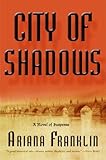
City of Shadows by Ariana Franklin


A fellow bibliophile sent me her copy of Ariana Franklin's City of Shadows. I picked it up off the cuff; the snippet on the back got my attention. As a historian of modern Europe, I enjoy reading fictional accounts of historical events. It is interesting to see how an author portrays famous moments through the eyes of individual characters. Once in a while I find myself frustrated at the historical inconsistencies in a novel, but in general I do not read fiction looking for a recreation of reality.

In that vein, Franklin has done an incredible job portraying interwar Berlin. Her story takes place in 1923, at the height of the German hyper-inflation and then in 1933 in the days preceding Hitler's election as Chancellor of Germany. The sense of realism that she describes as her characters walk through the streets, selling their personal belongings to buy food is really intriguing. I found myself tremendously invested in the lives of these characters. In the second half of the novel I held my breath knowing what was coming. Willing the characters to understand that despite their protestations, Hitler was going to come to power and destroy everything that they believed in. Franklin did an excellent job imbuing her story with the tensions of 1920s and 30s Berlin.

The story revolves around the... underworld, I suppose, of Berlin. The main character is a young Russian Jewish woman who works for a Russian shyster who owns nightclubs in Berlin. One of his clubs caters to homosexuals and the subplot revolves around this particular world. The one comment that I have about Franklin's story is that she gives the perception that homosexuality and cross-dressing were prevalent in this era. While it is true that this world did exist, it was a very small minority and did not have the public presence that I think she gives in her book. Nonetheless, she deals with the topic well and creates a fascinating world in which to place her novel.

Interestingly, my mom just finished this book as well - a total coincidence. When I mentioned the book she said, "Have you figured it out yet? There's a big hint at the beginning." At that point, I was reading purely for enjoyment. It had not occurred to me that there was a mystery to figure out. But, as soon as I thought for half a minute, I knew the answer. The big shock at the end of the book - yeah, not so shocking if you're looking for it.

All in all, a good read. I won't say light as it gets a bit heavy what with Nazis, homosexuals, and Russian pogroms. But an engaging read.

Thursday, November 13, 2008

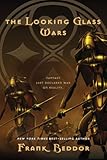
The Looking Glass Wars by Frank Beddor


There's nothing like a good young adult book to take a break from the real world. Especially with the incredible flowering of fantasy novels that have emerged in the wake of the Harry Potter phenomenon. There were tons of great young adult fantasies well before J. K. Rowling, but there presence in bookstores is overwhelming today.

In that vein, I picked up The Looking Glass Wars which my husband had bought and read a year or so ago. He had described the book as entertaining, which in his world means, "I read it in one sitting, ignored the world, and did not go to sleep until 2 am because I wanted to see how it ended." He had purchased it based on the recommendation of a bookstore owner who said Beddor's work was a good addition to the field of young adult adventure fantasy - building on the genre made famous by the now well-known retelling of The Wizard of Oz - Gregory Maguire's Wicked.

So what is the book about? Well, if you look at the title, it becomes vaguely self-evident. Beddor has retold the store of Alice in Wonderland. He begins with Alice Liddell running away from Lewis Carroll in frustration because he has so badly butchered the *true* story she told him about Wonderland. The book then takes the reader back to the life of Alyss Hart, seven year old princess of Wonderland, whose realm is ruled by White Imagination. Her nemesis is none other than Redd, her aunt who works with Black Imagination.

The story is inventive. It meshes well with the well-known story of Alice in Wonderland. But in addition, Beddor creates fascinating and unique characters to flesh out his world. The cards form an army known as "The Cut;" the Mad Hatter becomes Hatter Maddigan a bodyguard to the queen whose hat is his greatest weapon. The Cheshire Cat becomes the ultimate weapon used against the Alyssians (the good guys who follow Alyss) because of his ability to come back to life, yep, you guessed it, nine times.

I liked The Looking Glass Wars for me. But to be honest, I find some of the death, destruction, and violence in many young adult books to be too much for the young adult audience for whom it is written. I may have enjoyed it at 15-16, but as a parent I would not give it to my 12-13 year old to read. Plus, I'm getting a bit tired of retellings of famous works. They're novel, they're inventive. But are there no new ideas left?

Sunday, November 9, 2008

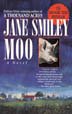
Moo by Jane Smiley

I picked up Moo at a library book sale. I had my $5 for a bag of books half full, I recognized Jane Smiley's name, so I threw it in the bag. Less than a week later some friends were talking about reading a book in a book club sort of way. Lo and behold, Moo showed up on the list. I voted for it since at least it was already on my shelf and I had heard of it (I hadn't heard of any of the other options). Randomly enough, it won the vote and we are reading it this month.

I picked up Smiley's book and started reading having absolutely no expectations and knowing nothing about the book other than most of her novels take place in rural mid-America. My five year old son did ask me how you spell "oink." Having no idea why he asked, he pointed out that the cover of my book has a pig that says "moo." Quite a conundrum for a five year old: the pig is a character in the book, the name of the university is Moo.
This book is great!! For anyone who has any experience with college life, this book is worth reading. She has an incredible ability to succinctly and humorously encapsulate the inanity of universities.

The one thing I would have liked while reading was a cheat sheet to keep track of all of the characters. Smiley follows close to two dozen characters through the book - undergrads, professors, secretaries, cafeteria workers: if this person can be related to the university in some way, they can be a character in her book. And her means of moving from character to character is refreshing. As a reader, you're in the head of character A who talks to character B. Now you're in B's head. Then B gets lunch for character C and suddenly you're seeing the world through her eyes. But, there were moments when I had trouble keeping Diane and Keri and Divonne and Lydia straight. I would be reading along and go "Oh yeah, 50 pages ago she was in her dorm room..."

The stories that seem terribly diverse at the beginning all come together near the end of the book and combine to make a coherent story. The less than honest guys get their comeuppance. The sweet freshmen survive their year. The professors, for the most part, end up happy than they started. The story did drag a bit in the middle, but every so often Smiley incorporated the funniest most honest perspectives on college life that it kept me reading.

I understand that Moo is no longer in print. To a certain extent the book is dated: communism has just fallen in Russia and professors are trying to integrate that into their belief systems. However, I don't think it is so dated that it isn't imminently readable now. If you can get a hold of a copy - read, enjoy, laugh. It's fun.