Thursday, November 13, 2008

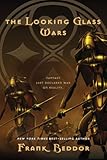
The Looking Glass Wars by Frank Beddor


There's nothing like a good young adult book to take a break from the real world. Especially with the incredible flowering of fantasy novels that have emerged in the wake of the Harry Potter phenomenon. There were tons of great young adult fantasies well before J. K. Rowling, but there presence in bookstores is overwhelming today.

In that vein, I picked up The Looking Glass Wars which my husband had bought and read a year or so ago. He had described the book as entertaining, which in his world means, "I read it in one sitting, ignored the world, and did not go to sleep until 2 am because I wanted to see how it ended." He had purchased it based on the recommendation of a bookstore owner who said Beddor's work was a good addition to the field of young adult adventure fantasy - building on the genre made famous by the now well-known retelling of The Wizard of Oz - Gregory Maguire's Wicked.

So what is the book about? Well, if you look at the title, it becomes vaguely self-evident. Beddor has retold the store of Alice in Wonderland. He begins with Alice Liddell running away from Lewis Carroll in frustration because he has so badly butchered the *true* story she told him about Wonderland. The book then takes the reader back to the life of Alyss Hart, seven year old princess of Wonderland, whose realm is ruled by White Imagination. Her nemesis is none other than Redd, her aunt who works with Black Imagination.

The story is inventive. It meshes well with the well-known story of Alice in Wonderland. But in addition, Beddor creates fascinating and unique characters to flesh out his world. The cards form an army known as "The Cut;" the Mad Hatter becomes Hatter Maddigan a bodyguard to the queen whose hat is his greatest weapon. The Cheshire Cat becomes the ultimate weapon used against the Alyssians (the good guys who follow Alyss) because of his ability to come back to life, yep, you guessed it, nine times.

I liked The Looking Glass Wars for me. But to be honest, I find some of the death, destruction, and violence in many young adult books to be too much for the young adult audience for whom it is written. I may have enjoyed it at 15-16, but as a parent I would not give it to my 12-13 year old to read. Plus, I'm getting a bit tired of retellings of famous works. They're novel, they're inventive. But are there no new ideas left?

Sunday, November 9, 2008

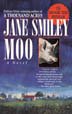
Moo by Jane Smiley

I picked up Moo at a library book sale. I had my $5 for a bag of books half full, I recognized Jane Smiley's name, so I threw it in the bag. Less than a week later some friends were talking about reading a book in a book club sort of way. Lo and behold, Moo showed up on the list. I voted for it since at least it was already on my shelf and I had heard of it (I hadn't heard of any of the other options). Randomly enough, it won the vote and we are reading it this month.

I picked up Smiley's book and started reading having absolutely no expectations and knowing nothing about the book other than most of her novels take place in rural mid-America. My five year old son did ask me how you spell "oink." Having no idea why he asked, he pointed out that the cover of my book has a pig that says "moo." Quite a conundrum for a five year old: the pig is a character in the book, the name of the university is Moo.
This book is great!! For anyone who has any experience with college life, this book is worth reading. She has an incredible ability to succinctly and humorously encapsulate the inanity of universities.

The one thing I would have liked while reading was a cheat sheet to keep track of all of the characters. Smiley follows close to two dozen characters through the book - undergrads, professors, secretaries, cafeteria workers: if this person can be related to the university in some way, they can be a character in her book. And her means of moving from character to character is refreshing. As a reader, you're in the head of character A who talks to character B. Now you're in B's head. Then B gets lunch for character C and suddenly you're seeing the world through her eyes. But, there were moments when I had trouble keeping Diane and Keri and Divonne and Lydia straight. I would be reading along and go "Oh yeah, 50 pages ago she was in her dorm room..."

The stories that seem terribly diverse at the beginning all come together near the end of the book and combine to make a coherent story. The less than honest guys get their comeuppance. The sweet freshmen survive their year. The professors, for the most part, end up happy than they started. The story did drag a bit in the middle, but every so often Smiley incorporated the funniest most honest perspectives on college life that it kept me reading.

I understand that Moo is no longer in print. To a certain extent the book is dated: communism has just fallen in Russia and professors are trying to integrate that into their belief systems. However, I don't think it is so dated that it isn't imminently readable now. If you can get a hold of a copy - read, enjoy, laugh. It's fun.

Friday, October 31, 2008

O'Artful Death by Sarah Stewart Taylor

Sarah Stewart Taylor's first novel O'Artful Death was a real treat. I enjoyed it tremendously and found it both novel and a worthwhile mystery to untangle.

I met Taylor at a Mystery Book Signing a year and a half ago and have been patiently waiting to read the first two books in her series. She was extremely nice, very approachable, and did not fit the stereotypical mold of a cozy mystery author. She was the kind of author I could somehow imagine emailing and getting a thoughtful response from her. Her personality as much as the subject matter attracted me to her books.

Taylor's main character, Sweeney St. George is an art historian who studies funerary art. Yep, gravestones. This first story has her uncovering the history of a pre-Raphelite tomb located at an artist's colony in Vermont. In good mystery style, the mystery surrounding the early death becomes tied in to a contemporary murder. Sweeney contacts the descendant of the woman who died to ask about the tomb. Within 24 hours the descendant is killed. The game is afoot.

I enjoyed the story that Taylor told outside of the mystery. She had obviously done extensive research into both art and American artist's colonies of the nineteenth century. A world I know absolutely nothing about, I find myself curious to learn a bit more after reading O'Artful Death. In addition, the convoluted story that emerges left me guessing. Taylor placed well argued red herrings. And, she had enough twists and turns that the murderer was not obvious. But, once the crimes had been revealed I could go back and pick up the clues she had placed to go "oh, I get it now." The book was nowhere near as fluffy as some of the mysteries I have read in the recent past.

My only gripe (and this is just a personal annoyance of mine) is that like many academic mysteries, academia is only interjected at the beginning to set up the main character as a researcher. Per usual, the research takes place off campus during vacation.

I will definitely read more of Taylor's work. I have Judgement of the Grave waiting for me upstairs. But, it is time to turn to slightly more literary pursuits and pick up my two book club books next.

Wednesday, October 29, 2008

Murder Most Frothy by Cleo Coyle


Light, amusing, fun. The answer was not obvious - at the very least the twists and turns of who was involved kept me reading. The coffee tips were novel. The hunk was, well, hunky.

After reading three previous Cleo Coyle Coffeehouse mystery books I don't have too much to add.

A good beach read. Worth the time. A nice break from real life and political debates.

Friday, October 24, 2008

The Invisible Ring by Anne Bishop


After finishing Three Cups of Tea I needed something light and fun. My husband handed me The Invisible Ring. It is the fourth book in Anne Bishop's Black Jewels trilogy. I really enjoyed the Black Jewels trilogy, it is a unique perspective for a fantasy series. However, we went out to buy a fantasy-loving friend a copy of the series. The new printing of the book has bawdy romance covers, well maybe not bawdy, but definitely cheesy. My friend would have looked at the covers, laughed at me for giving him the books, and never opened them. They're not like that, really! Well, they do have implied sex - the rings serve a very specific purpose (think about it for just a minute. Yep, go there). But, the society that Bishop has set up is novel and worth contemplation. To explain, just a bit: the premise of Bishop's world is that women dominate. Men are subservient. But, the society has had to figure out a way to tame the bellicosity of men: hence the rings that control mens' actions.

Invisible Ring does not pick up where the trilogy let off. It is more of a companion novel set in the same world. You could read the book as a stand alone, but it makes much more sense having the background of the Black Jewels world. At its base, there is a romance: boy meets girl, boy and girl hate each other, boy and girl fall in love but can't acknowledge it, boy and girl finally hug and make up. Yet once again the social nuances are what make the story.

There is humor and poking fun at our own gender stereotypes that I enjoy. A good romance is worth picking up from time to time. If you enjoy fantasy series like Jacqueline Carey's Kushiel's books or even Marion Zimmer Bradley's Darkover series, you would enjoy Bishop. She is not the best author for a young reader because of the implied sexuality. I have more Bishop on my shelf. I will read it when I need an escape from reality.

Saturday, October 11, 2008

Three Cups of Tea; One Man's Mission to Promote Peace by Greg Mortenson


I had picked up Three Cups of Tea multiple times at the bookstore. Then my mother-in-law sent me her copy and her recommendations. Book in hand, I placed it on my bookshelf with the greatest of intentions, but never actually picked it up and read it. Finally, my book group suggested this book for our next meeting. With the needed shove, I read Three Cups of Tea in the past couple of weeks.

I have varied opinions of this book. I liked it; I didn't love it. I learned a ton. It was a slow read and I was ready to put it down when I finally finished. I found it inspiring but equally frustrating at points too. I feel like I will be criticized for taking issue with anything about the book because of what an incredible humanitarian Greg Mortenson is - how could I not love every moment of this inspirational work? - but I do have a few issues. Let me see if I can explain myself more clearly.

First, and this is maybe pedantic, but Greg Mortenson is not actually the author of the book, he is the subject of the book. Journalist David Oliver Relin actually wrote Three Cups of Tea with the unwavering support of Mortenson and his family. Much of the story is told through the eyes of Mortenson. But, much of it is also written as hero worship (and I mean that in the most benign, literal sense) to the incredible feats that Mortenson accomplished. When I first began reading, I had flashbacks to Into the Wild, a book that I personally despised. There is a similar sense of awe around the choices of an anti-hero. And I must say the craziness of mountain climbers showed through as well. I am not suggesting that this fact detracts from the book, but I do feel that it is a slight misnomer when picking up the work.

Second, through much of the first half of the book I felt incredible empathy for Mortenson's wife. She is such a small figure in the book and yet as a spouse I cannot imagine taking not only second place but last place in my husband's life. I understand the greater good that Mortenson is accomplishing in Pakistan and Afghanistan, and the impact that his work can have on the war on terror, but shouldn't his actions start at home? As the book progresses I have to wonder if he thinks about his family at all. I spent too much time fretting for the life of the woman he continually leaves behind.

Third, the political nature of the book occasionally (and only very occasionally) gets a bit heavy-handed for me. I don't know any way around this as Mortenson's work comes into direct conflict with American governmental agenda in the region. But I don't know that the digs at the government strengthen his story in any way. To me they felt like necessary points to help cement his readership rather than effective tools to understanding Mortenson's work.

On the flip side, I was absolutely fascinated by the story of life in Pakistan. I know nothing about the region but find it has become a topic of discussion more and more. I feel like I am much better educated about the country, its history, and its current day issues than I have ever been. For that, I praise Mortenson and Relin.

In addition, because of Mortenson's unique perspective on rural Pakistan, I was pleased at his portrayal of Islam, madrassas, and the treatment of women in Islamic communities. The authors worked doggedly to remain honest and not revert to universalist descriptions of "all Muslim women" and "all Muslim faith." The authors very effectively portrayed the individualism of belief, of views of the United States, of treatment of women... I would like to use sections of the book in a classroom because I believe it effectively shows the diversity that is all too often lacking in American media portrayals of Central Asia.

I would wholeheartedly recommend Mortenson. But not to everyone. Because of the political statements I would hesitate to recommend it to certain people. Not that they couldn't benefit from learning about Mortenson's work, but I am afraid they would be turned off by the political descriptions and therefore not absorb the important messages that lay between that politicking.

Thursday, October 2, 2008

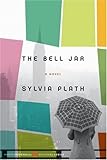
The Bell Jar by Sylvia Plath


I find myself completely stymied when I try to write about my response to The Bell Jar. I can't imagine what I might have to add to a book that has been discussed by so many people over the past fifty years. People have written dissertations about Sylvia Plath and her personal experiences. My first introduction to The Bell Jar was my dad's use of it in his high school English classes. This is one of those works of *literature* that I have wanted to read but up until now had never gotten around to. I knew enough about the topic that attempted suicide was a theme and therefore I had waited to read it until I was in the right frame of mind for a less than uplifting book.

In fact, I found the themes of The Bell Jar to be more interesting and relevant than I had assumed. To me, Plath has done an incredible job describing the stresses of mid-American life for post-adolescent women. The concerns about sexuality, the feeling of inadequacy based on gender, the discontent with understanding psychological problems all appeared strikingly well in this book. Plath has done a remarkable job at allowing the reader to enter the mind of a woman whose life is at odds with the culture in which she lives. In many ways the characters disenchantment with society is not only understandable it is possibly even laudatory (not that I am advocating attempted suicide, but I can imagine the isolation and discontent that the character felt within her enclosed world and the outlet that she chose based on her experiences).

Moreover, Plath's poetic talent resound in the writing of the book. In very few words Plath succeeds in painting a panoramic picture of both the world in which she lives and the internal conflict of her protagonist. I found myself examining her use of terminology to describe in short order a detailed scenario. Plath's description of characters in particular resonated to me. I could imagine the smallest detail of individuals like Buddy and Joan although Plath never fell to describing them carefully.

Having read The Bell Jar, I am curious to know more. I did a quick internet search on the book to answer a few questions about the text that left me curious. I would now like to go back and read her poetry. I am also intrigued to read a biography of Sylvia Plath to compare to The Bell Jar in order to better understand where fiction met autobiography in her work.

To me The Bell Jar is a seminal work in twentieth-century American literature. Everyone should have to read it. Although it was first written over fifty years ago, many of the themes remain relevant today. I can imagine scenarios in which I would hand this book to a college age woman who was undergoing a stressful period while trying to find her place in society. The book is much less fatalistic and depressing than I had feared. Although Plath did take her own life, the book ends on an optimistic note suggesting that the main character had overcome the challenges that had shaken her so strongly.